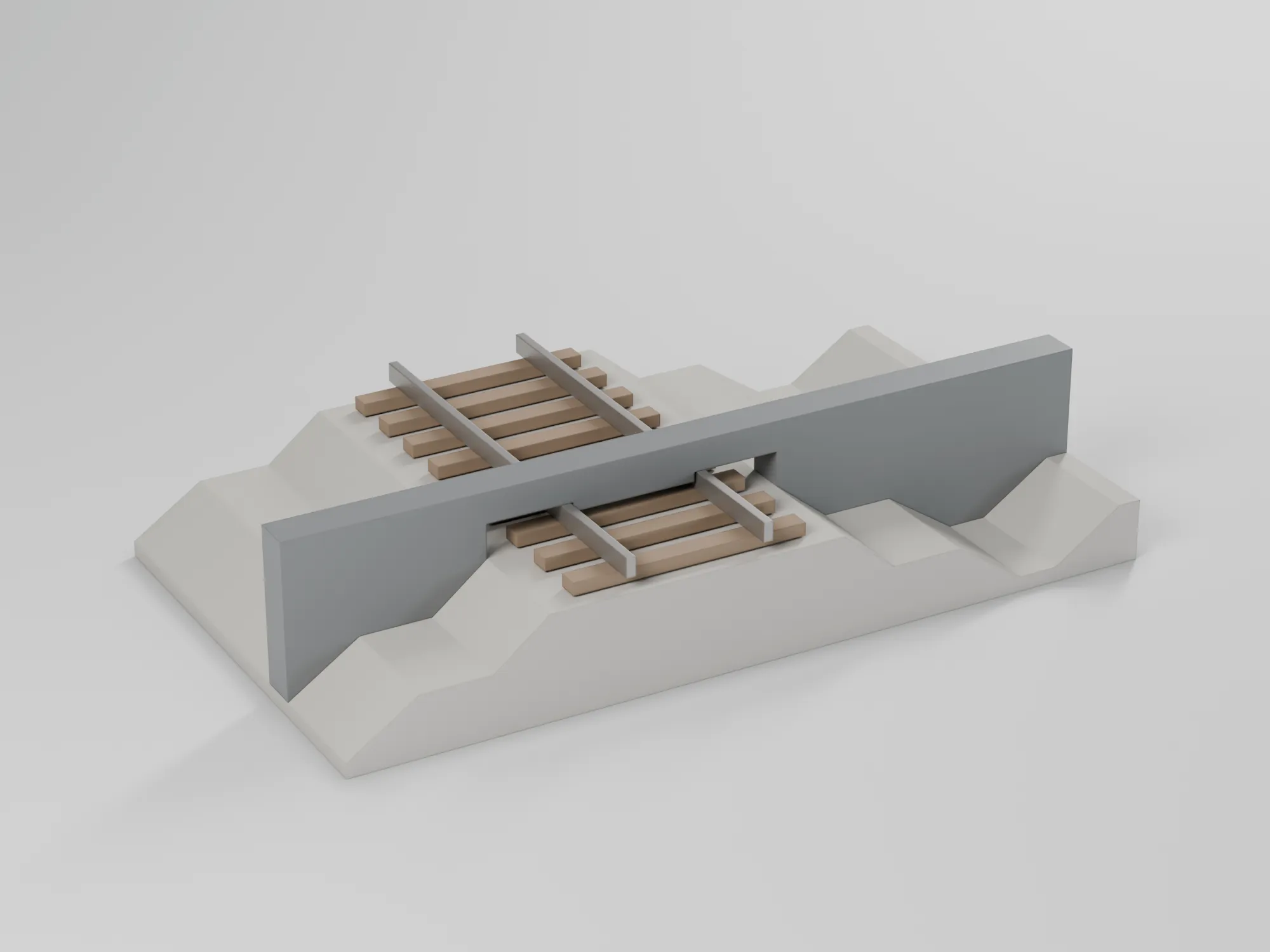
Trackbed cross-section template – ballast bed, cess, ditch and embankment, Z, N, TT, H0
Model railway accessories
from€1.50
3D print files for model railway accessories to NEM standards for Z, N, TT and H0: check gauges, platform edges, tunnel portals, cable troughs and loads. The dimensions come from the current NEM editions and documented prototype dimensions, and every design is available in all sensible scales. Print the free check gauge first.
The parts follow the standard, not a track or vehicle manufacturer. There are four scales under NEM 010: Z (1:220, track gauge 6.5 mm), N (1:160, 9 mm), TT (1:120, 12 mm) and H0 (1:87, 16.5 mm). There is one model per design and the scales are variants, so you only download yours. Z is offered only where the smallest feature stays at least 0.5 mm in the model; with the check gauges that almost always works, with details mostly not.
The dimensions come from the current NEM editions (clearance gauge NEM 102 from 2019, vehicle loading gauge NEM 301 and track spacing NEM 112 from 2024) or from documented prototype dimensions divided by the scale. Each product page states which source applies; estimated values are marked as estimates.
Parts beside the track refer to the top of the rail. How high that sits above the baseboard depends on the track system and the trackbed; we have no single documented value. The parts therefore stand with their base directly on the baseboard or trackbed (height offset 0) and are not cut to any particular track system. If the top of the rail on your track is higher, measure the height and shim the part accordingly.
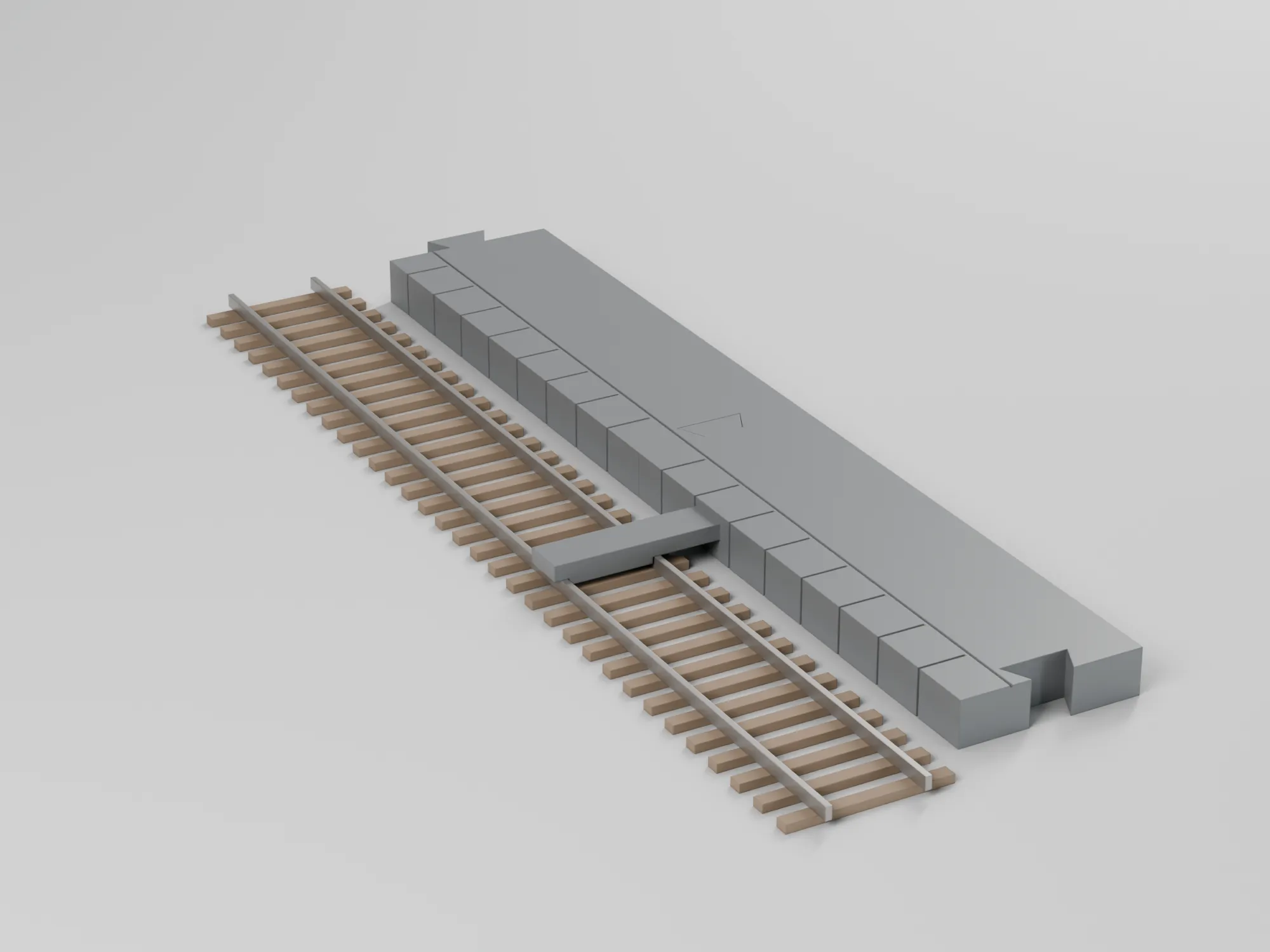
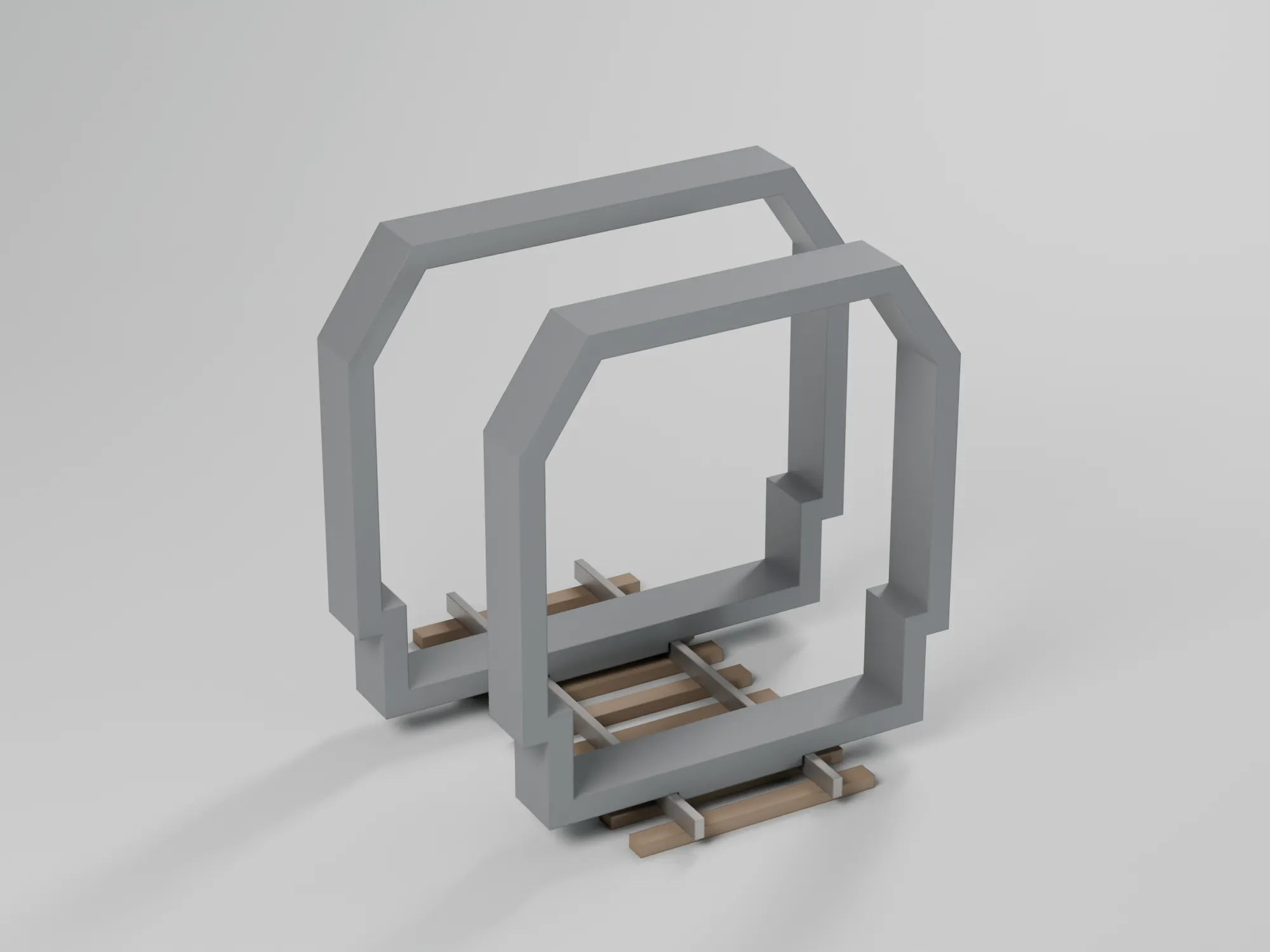
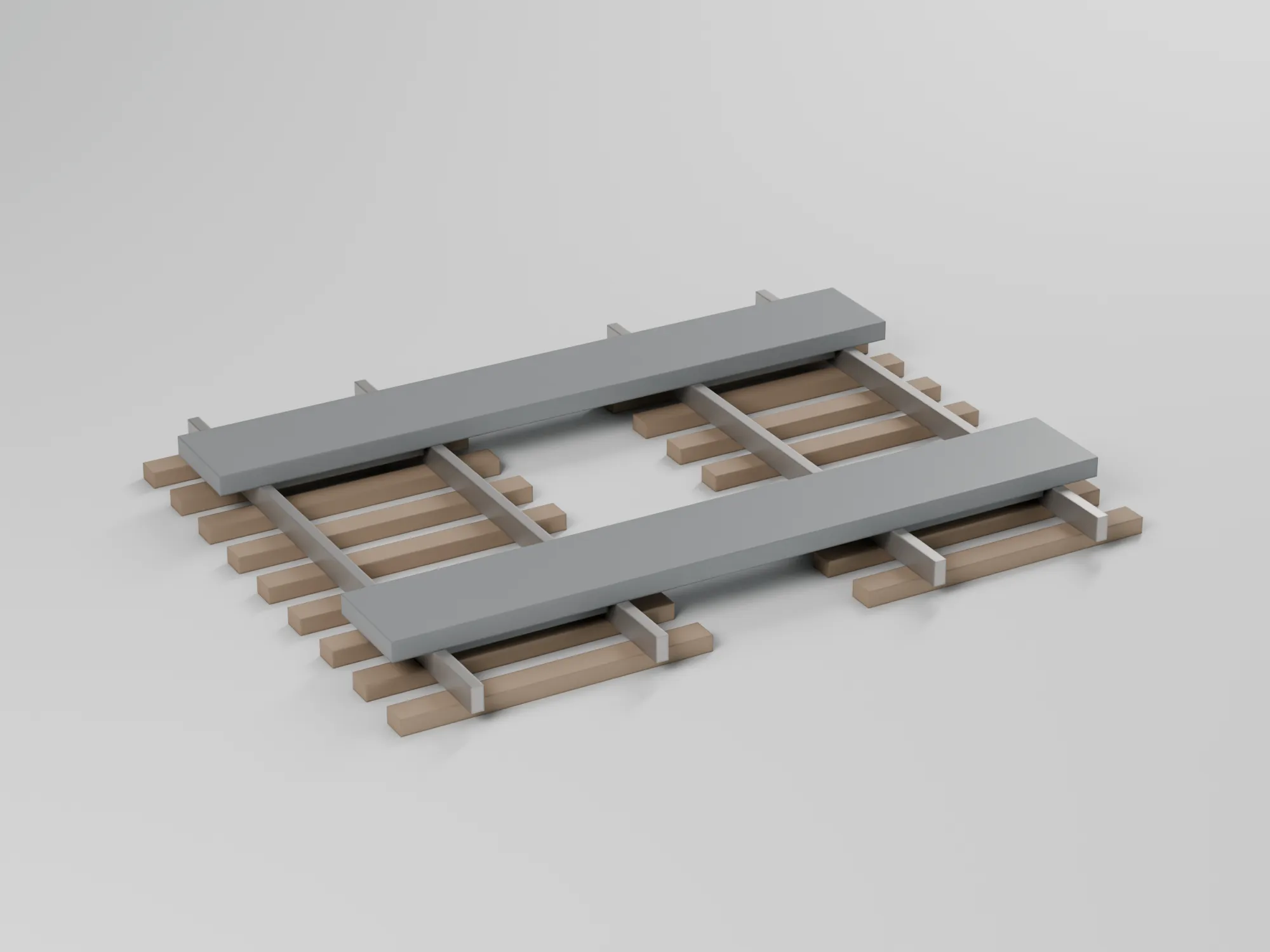
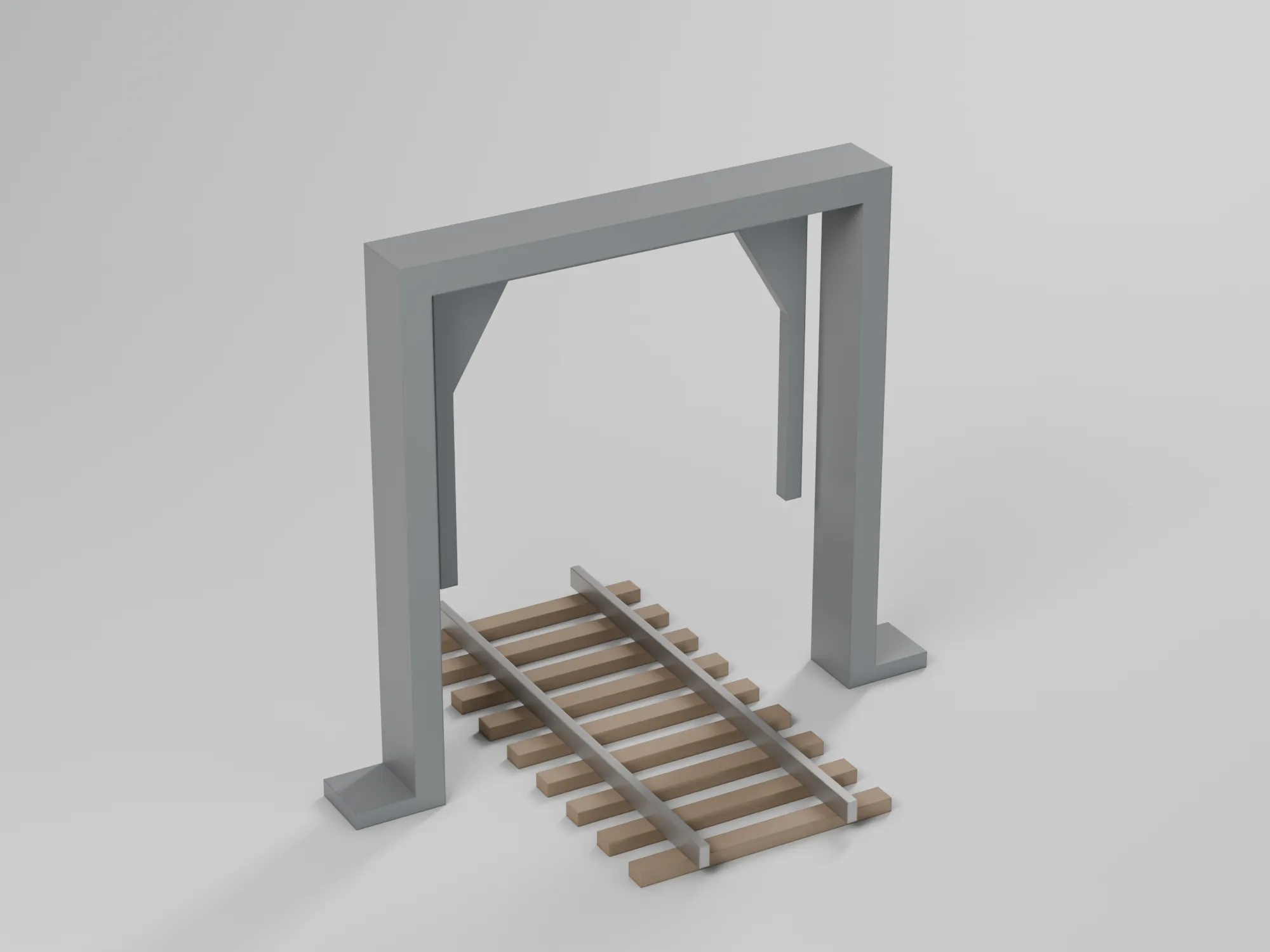
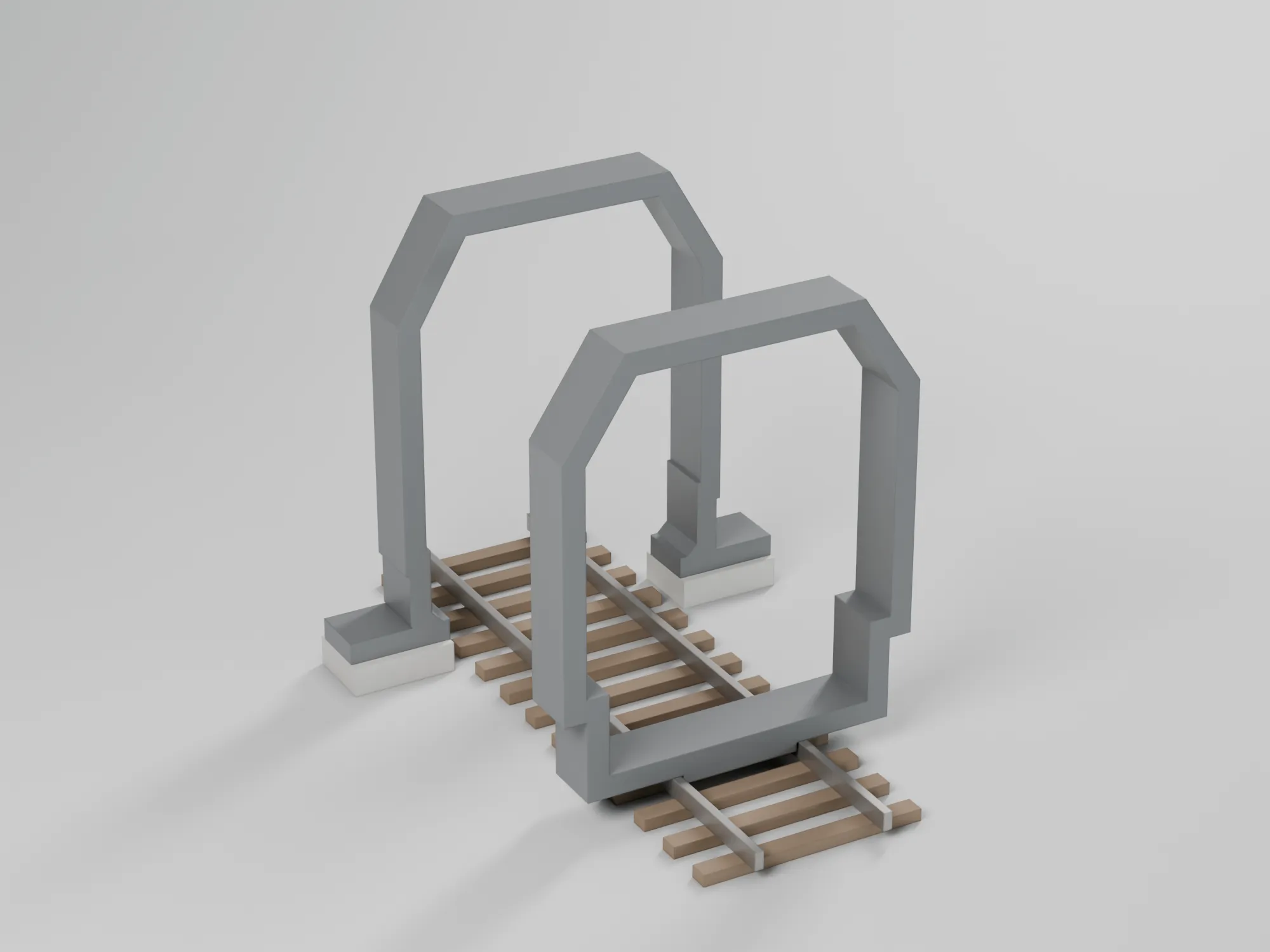
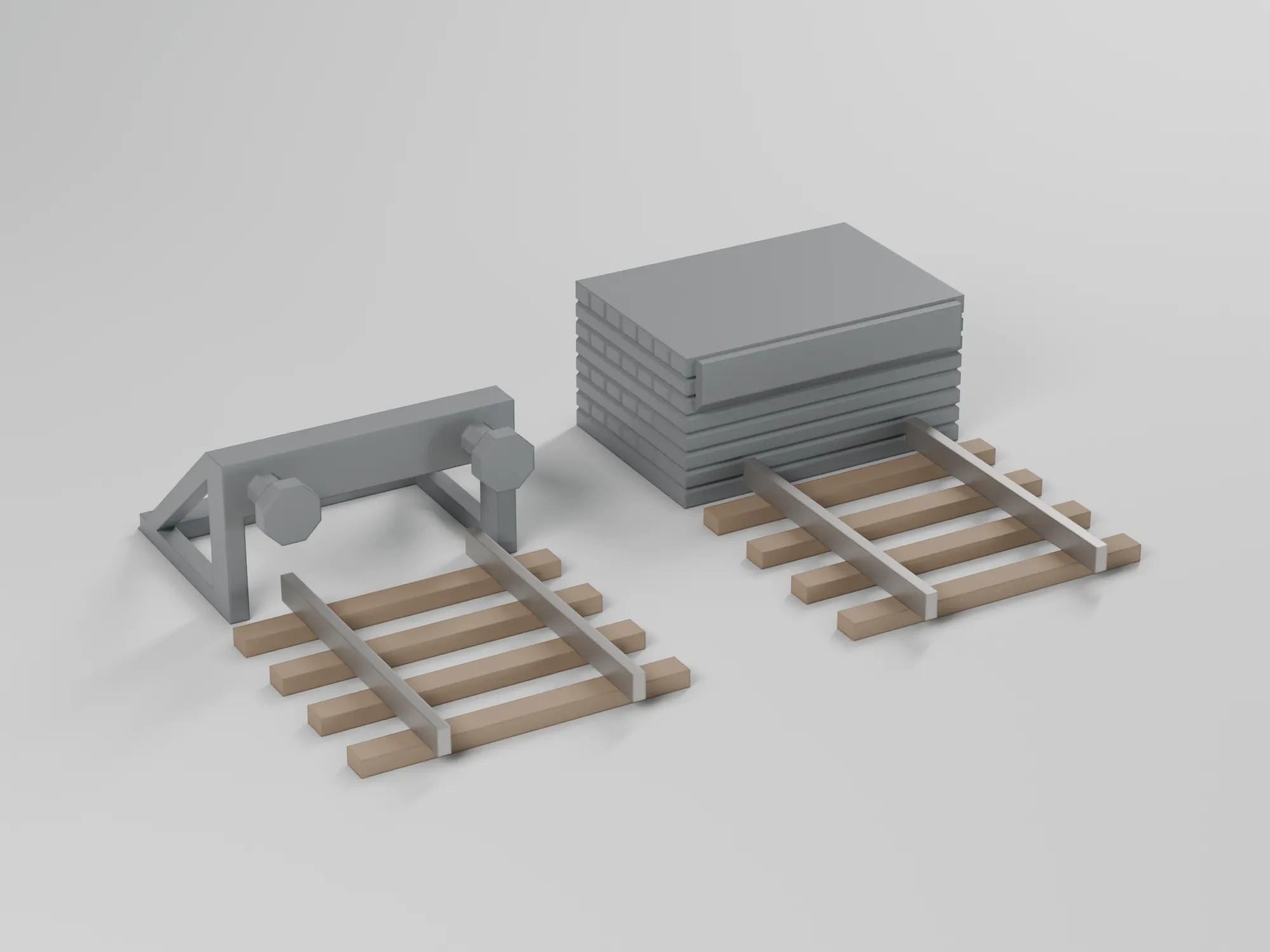
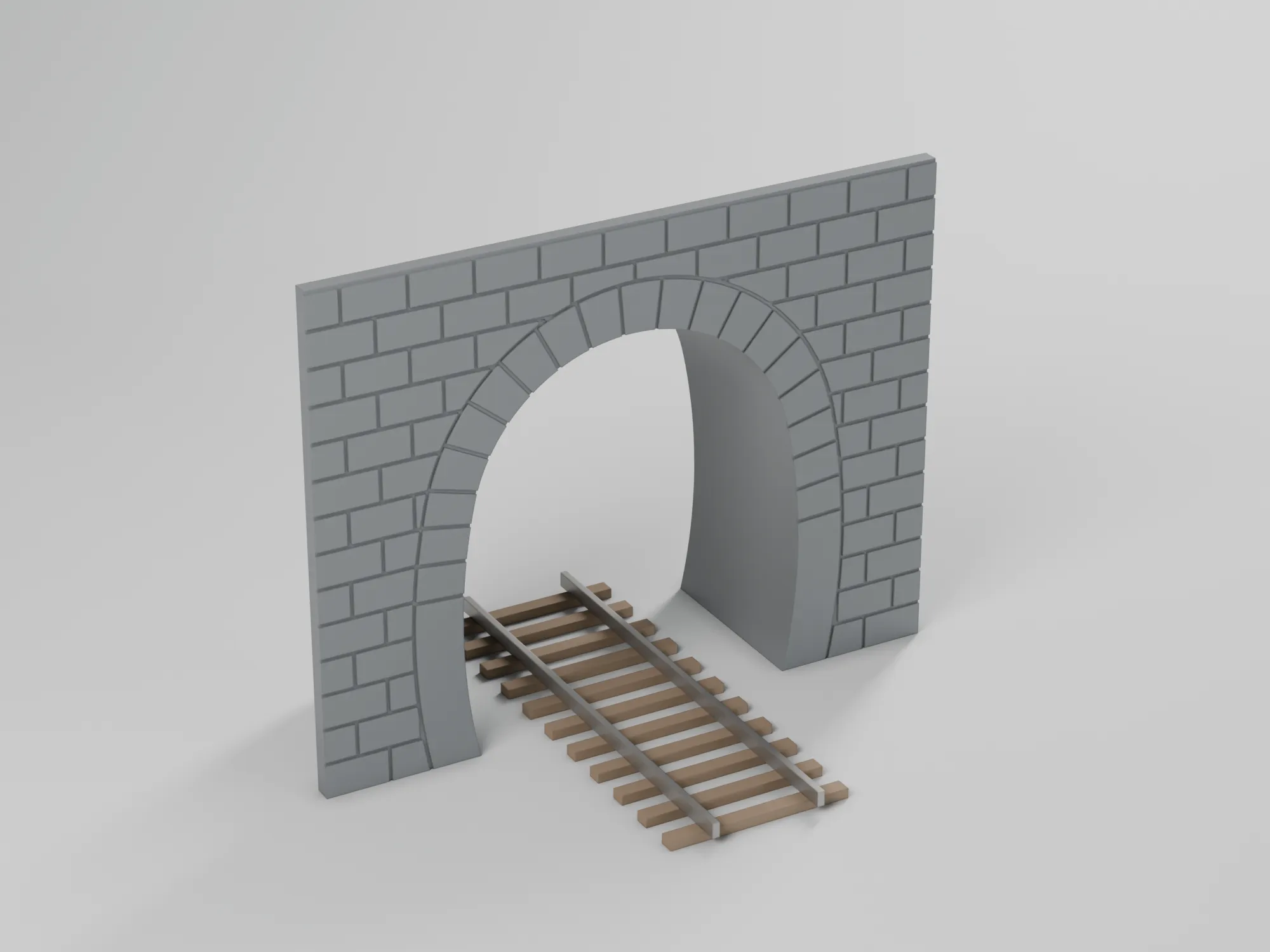
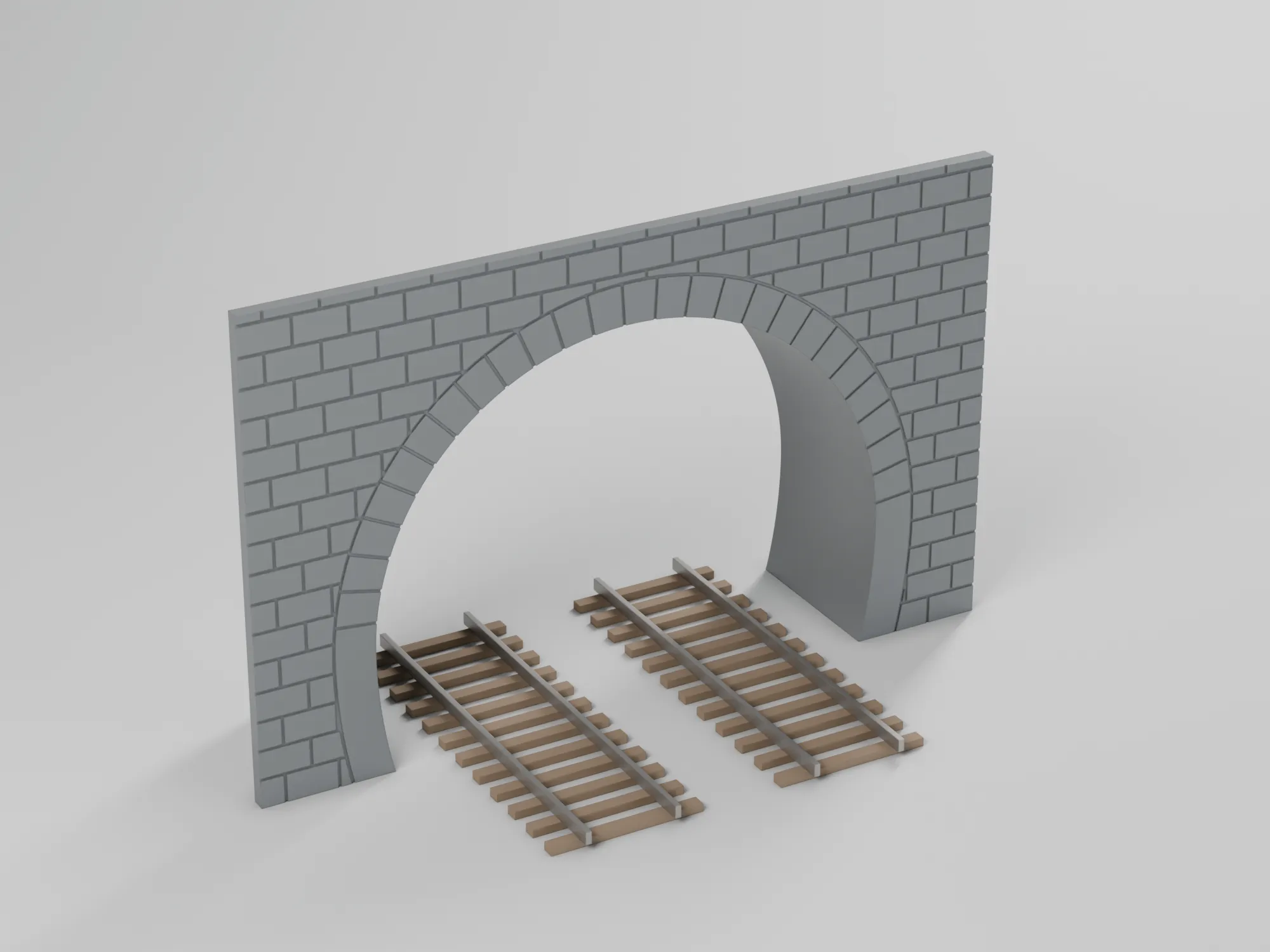
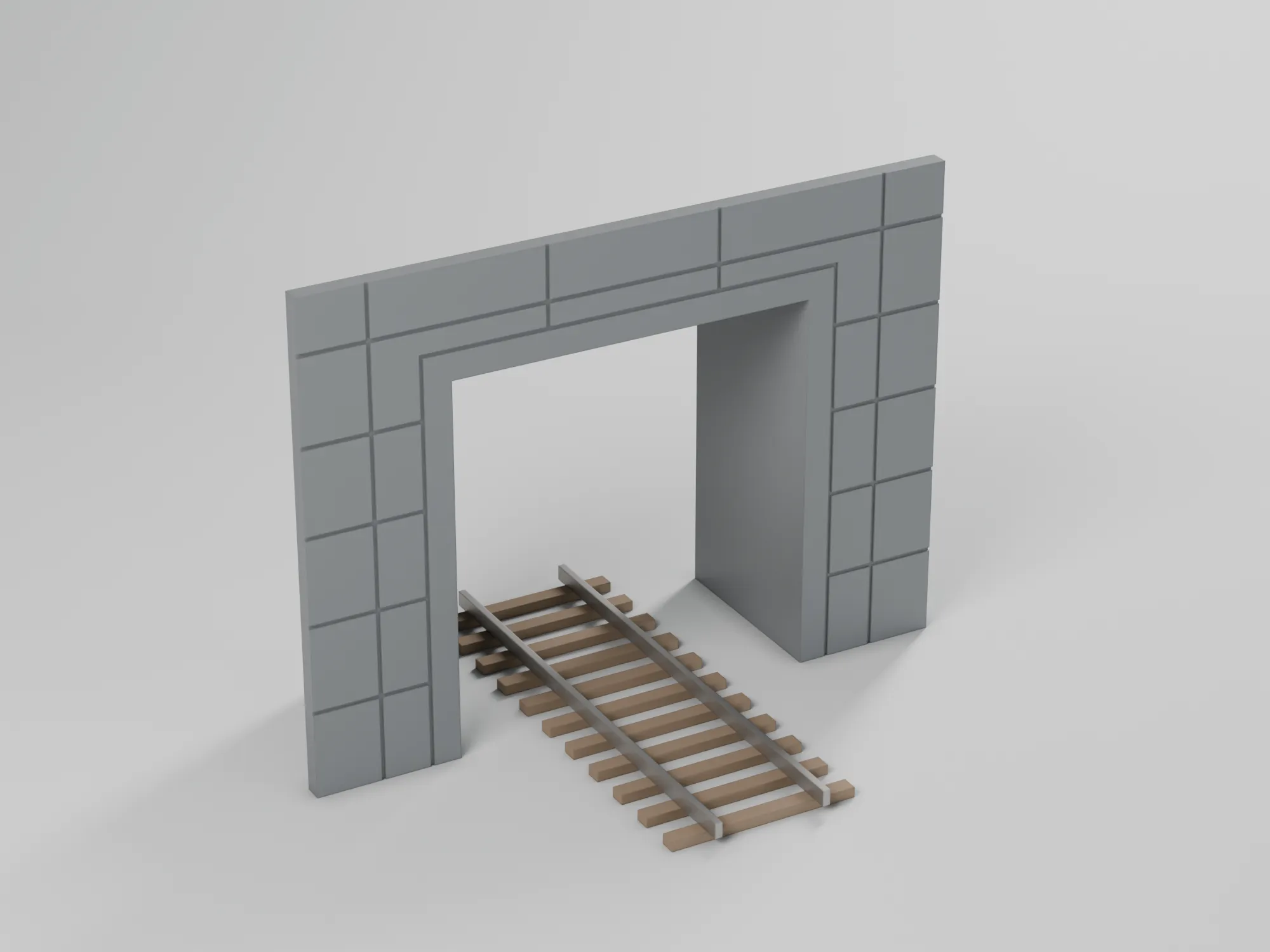
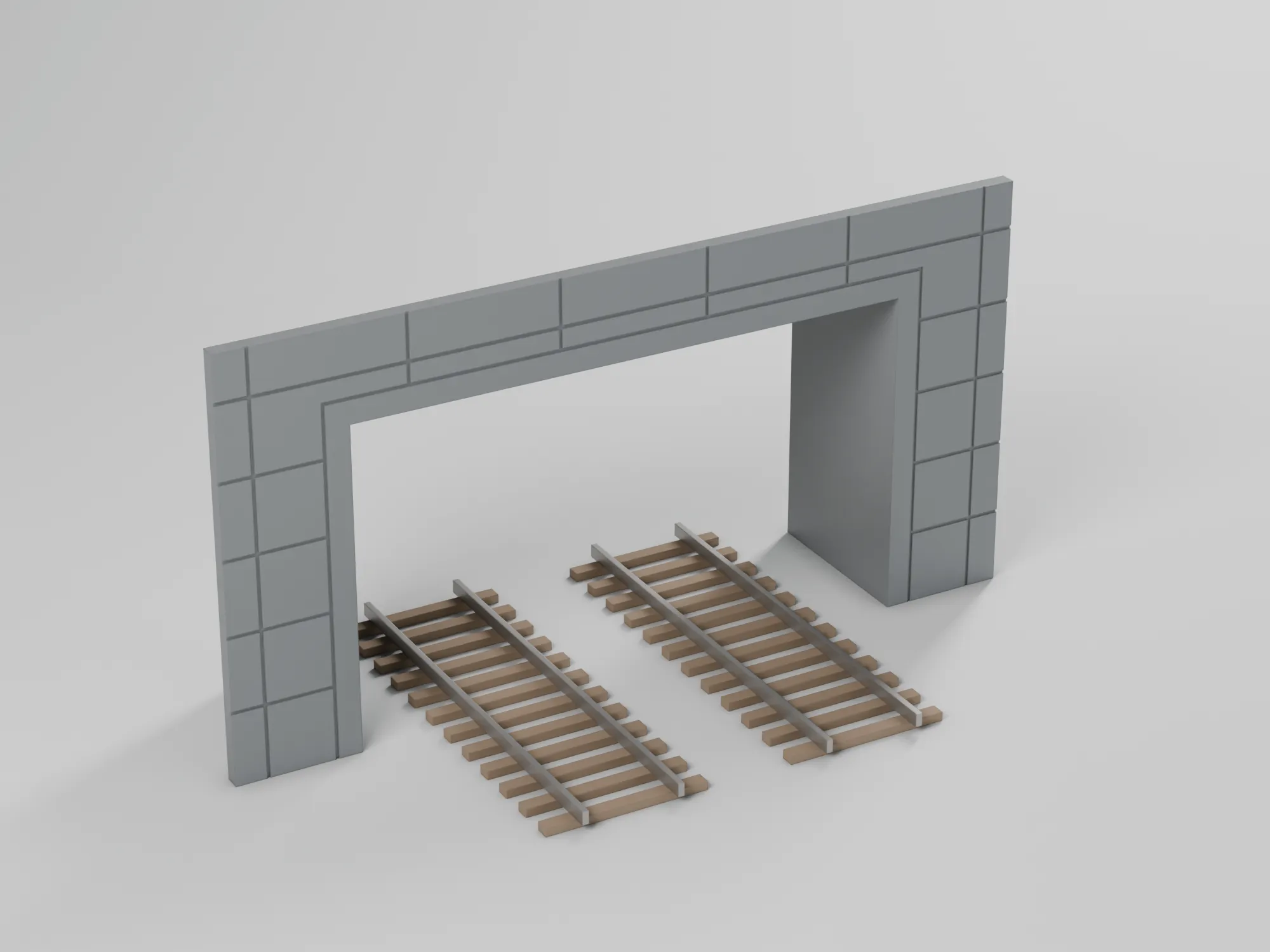
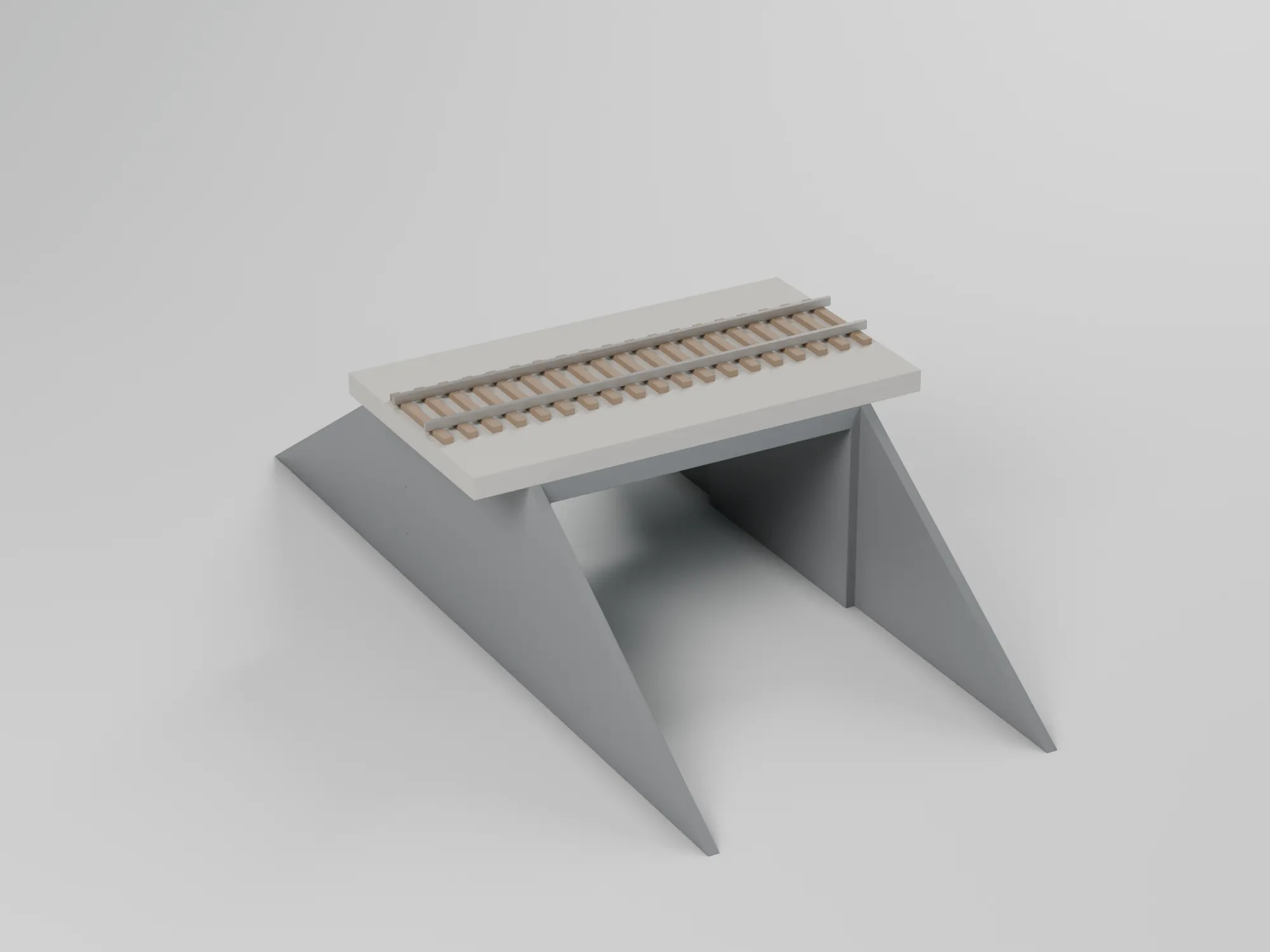
Gauges and structural parts (class A): a clearance and vehicle check gauge, a track spacing gauge to NEM 112, a trackbed cross-section gauge to NEM 122 and a curve clearance gauge to NEM 103 (only for radii where the standard's table gives a value). In addition platform edge modules for platform heights of 38, 55, 76 and 96 cm, tunnel portals as rectangle or arch, single and double track, an underpass frame, a loading gauge portal for the goods yard and buffer stops.
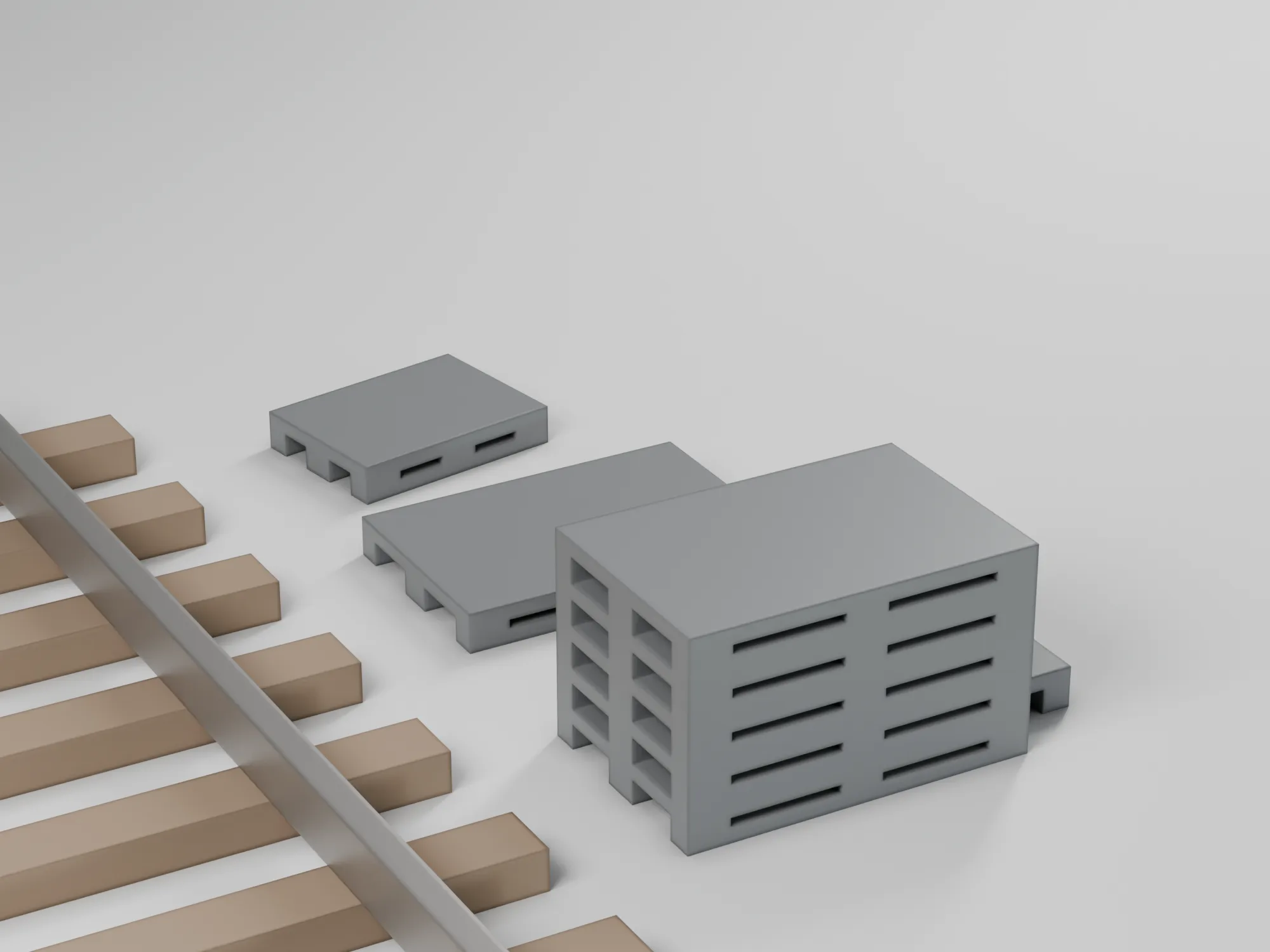
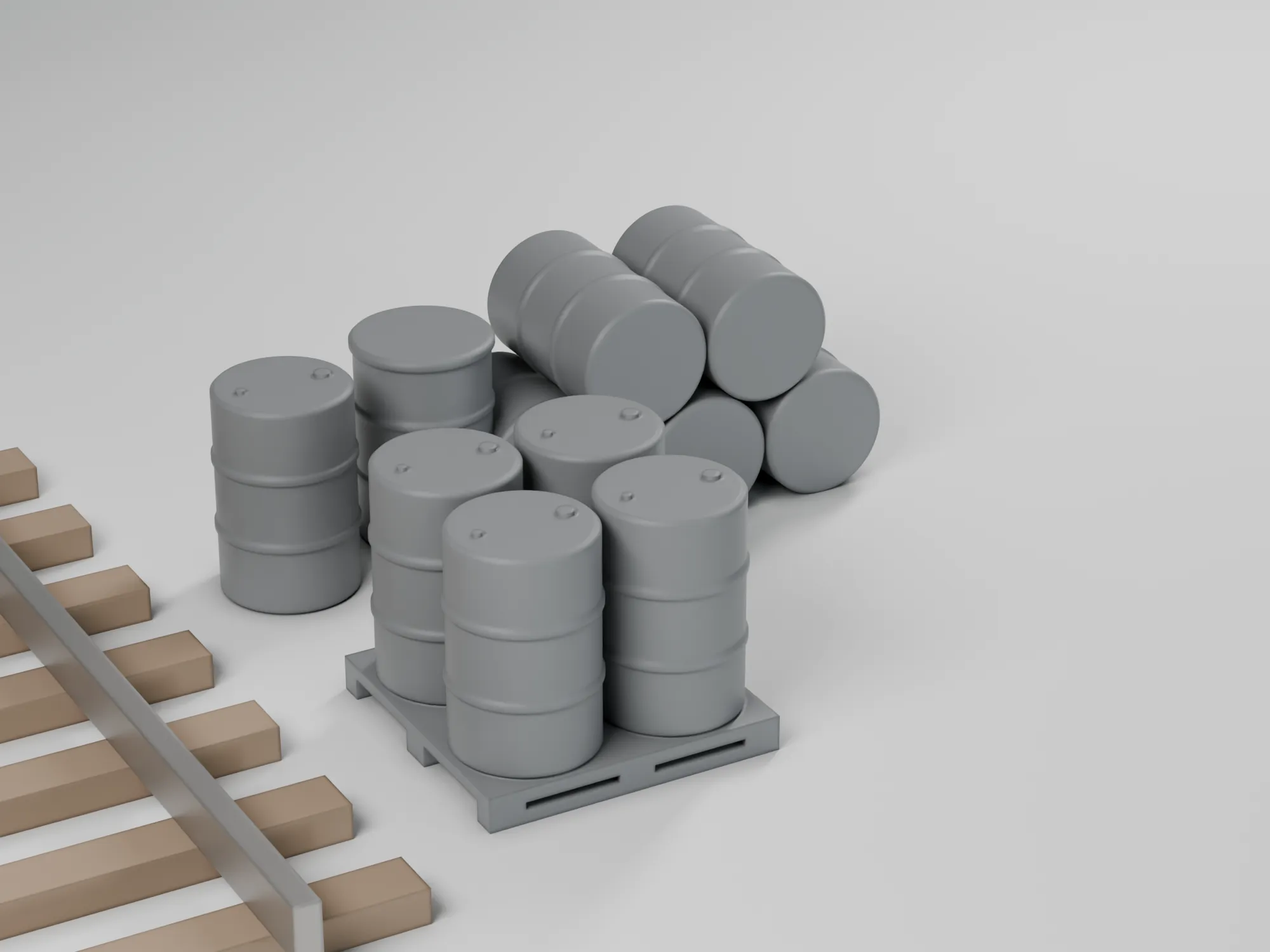
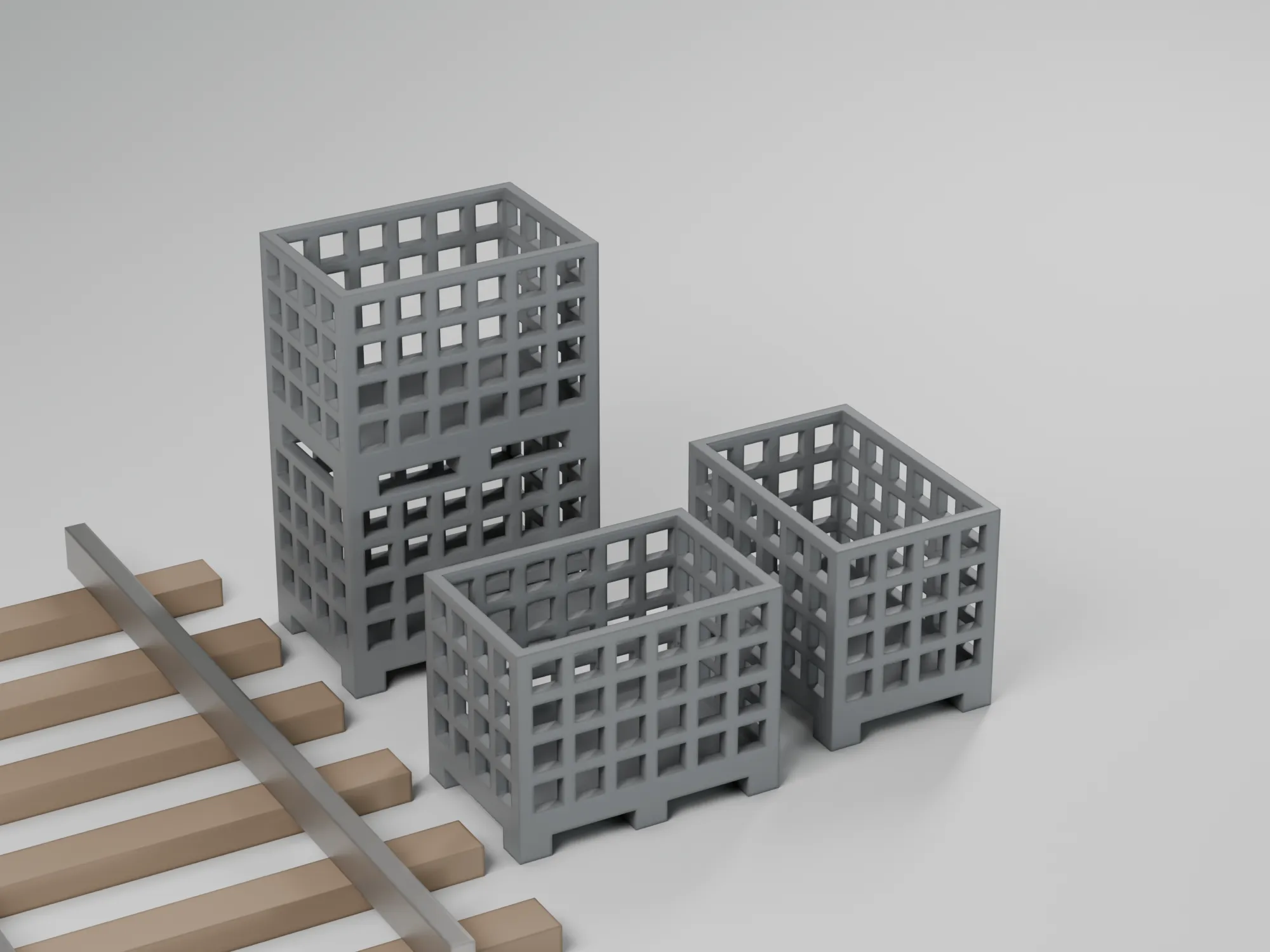
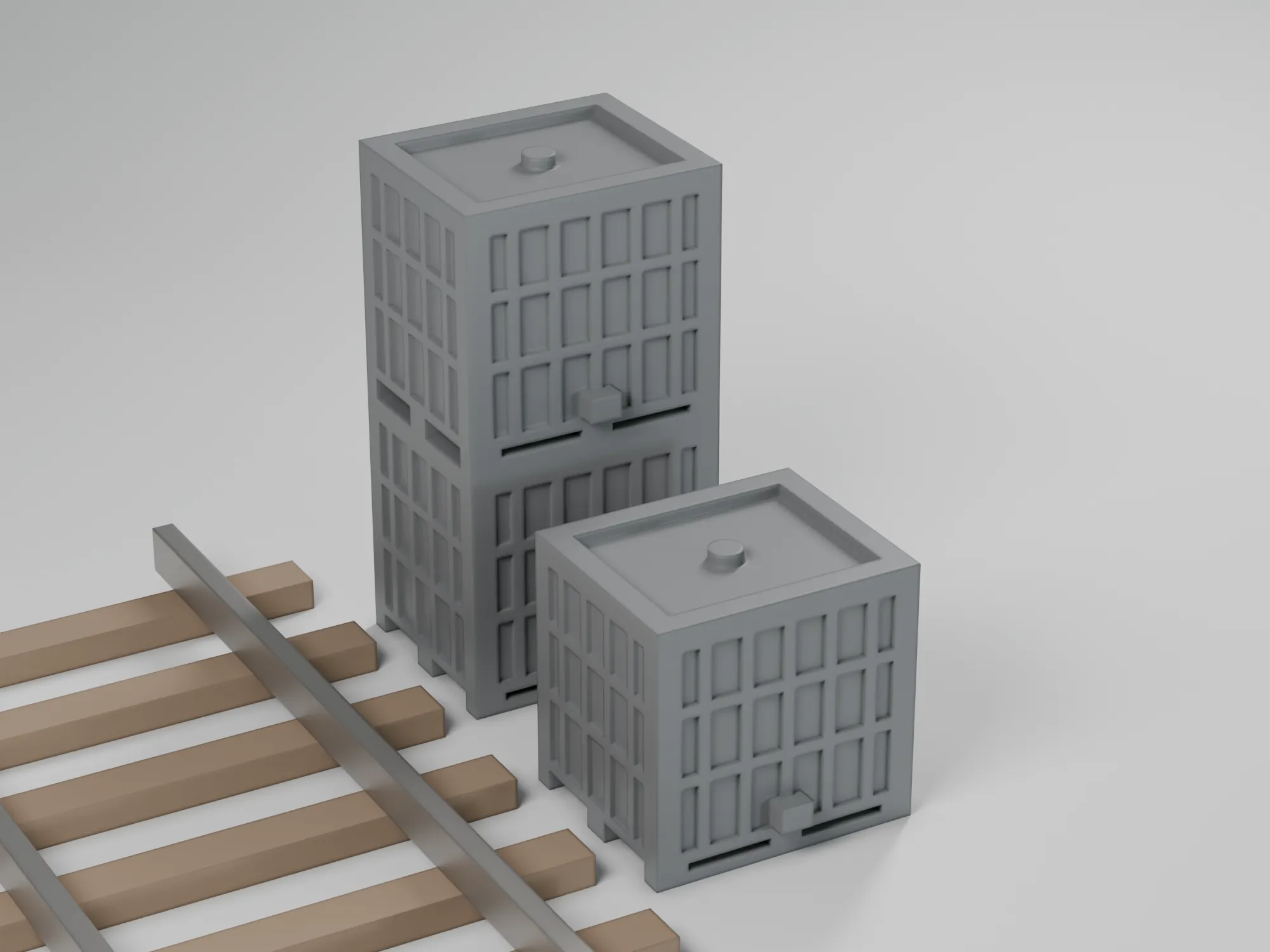
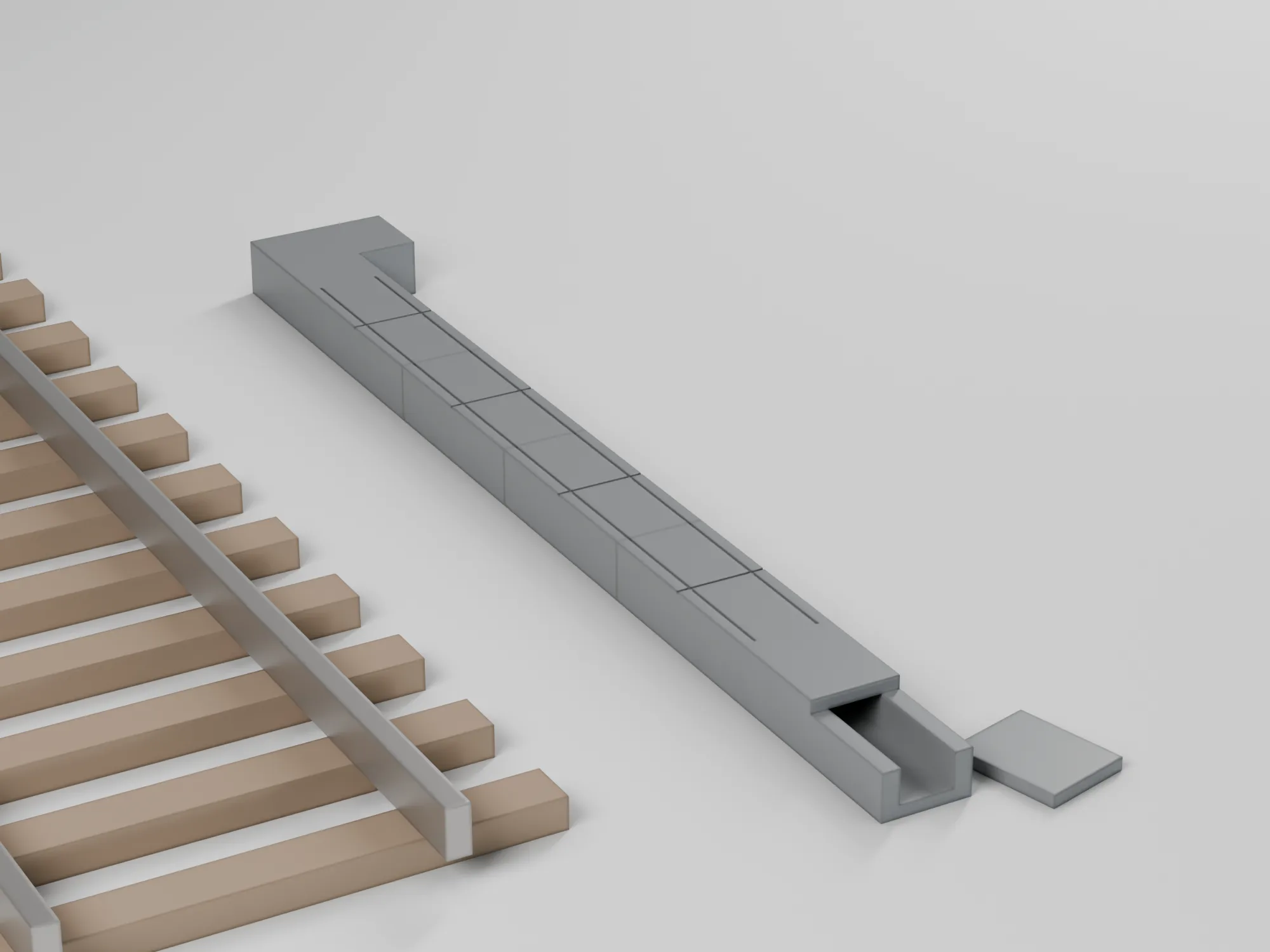
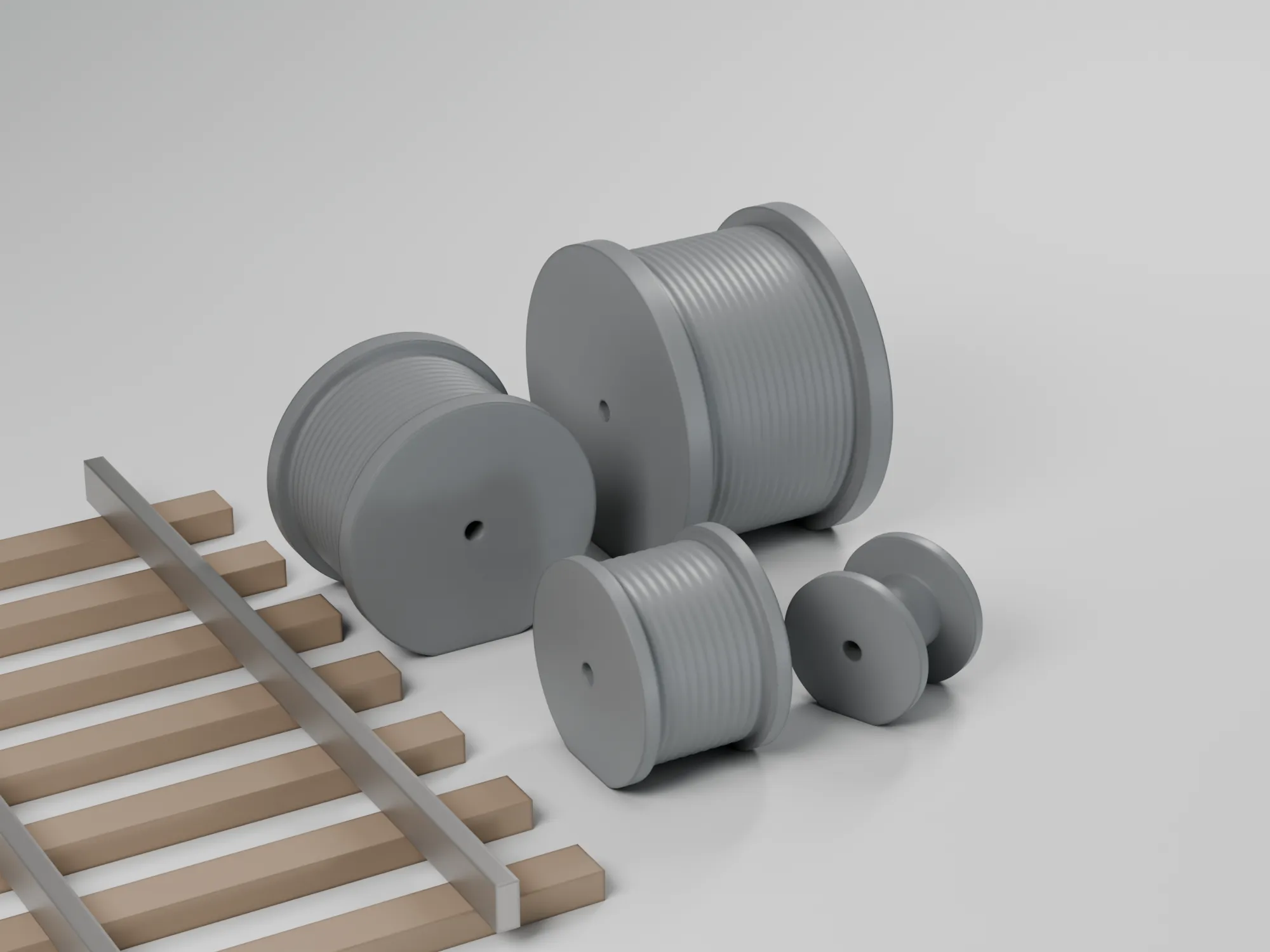
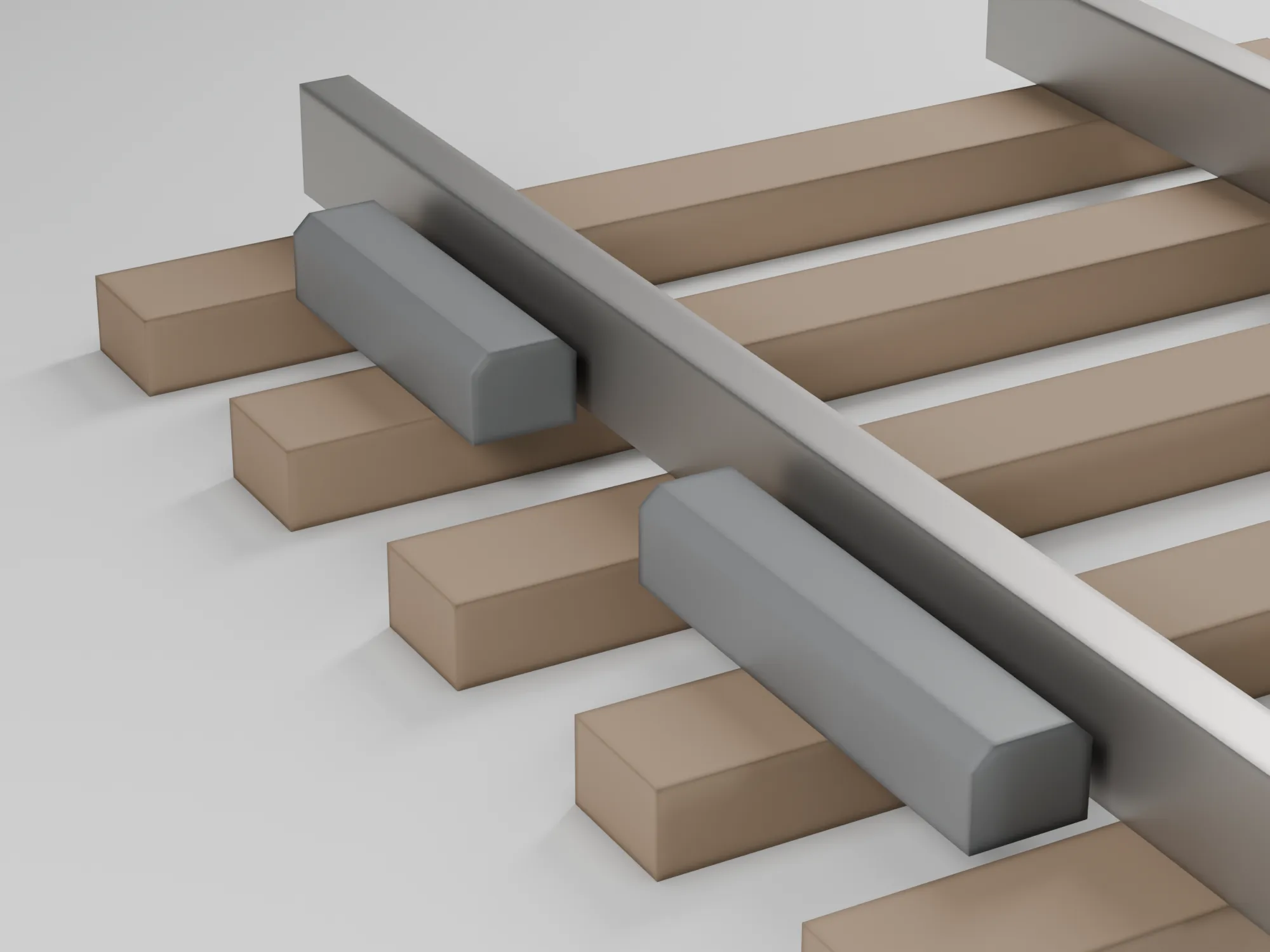
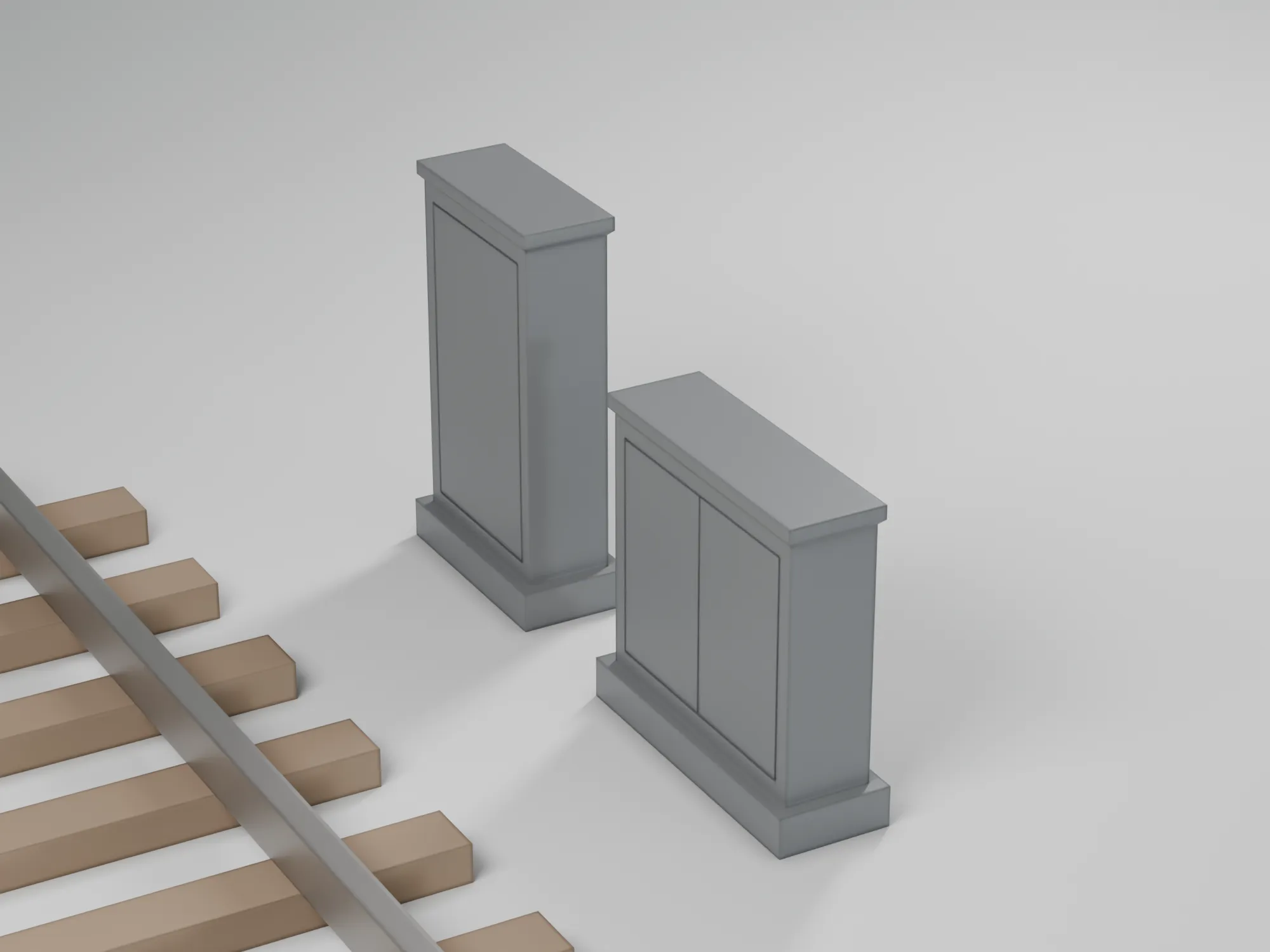
Details (class B): cable troughs of German design in sizes I, II, III, IIIa and IV with corners and lids, neutral control cabinets, cable reels, EUR pallets, 200-litre drums, mesh boxes and IBC containers as loads. They are small to scale and therefore best printed in resin. For buffer stops, cabinets, mesh boxes and IBCs the prototype dimensions are only estimated; that is stated explicitly.
Platform edges sit at the NEM limit by default (edge at BL3/2, height up to HL1). 38, 76 and 96 cm come from section 13 of the German railway construction and operating regulations (EBO); 55 cm occurs in regional networks as an exception. An edge position closer to the prototype, at about 1.65 m from the track centre and in H0 roughly 2 mm closer to the track axis, comes as a second variant; check it with the check gauge before installing. Nothing here carries current. The range is released step by step; the list on this page shows which files are already available.
Everything that stands beside or above the track has to leave room for the vehicles and must not touch them. NEM 102 defines this space as the clearance gauge: for H0, in the 2019 edition, it is at most 48 mm wide and 57 mm high (without overhead line); in the lower zone up to 11 mm of height, platform and ramp edges may come as close as 21 mm to the track axis. The vehicles themselves stay inside their loading gauge under NEM 301 (2024 edition), in H0 at most 40 mm wide and 55 mm high.
Between the two there is little room, and the editions of the standard differ: in an older edition the overall height in H0 was still 59 mm instead of 57 mm. Anyone working from an older table gets different values. We work from the current editions and state the edition with every dimension.
That is why the check gauge is free, and why it is best printed first: one plate per scale with an opening for the clearance gauge to NEM 102 and one for the vehicle loading gauge to NEM 301, plus measuring tabs for the edge distance and height of platforms and ramps. With it you check whether a vehicle or a load passes through the opening and whether the edge and height of your platform stay within the standard, before you print a portal or a platform. It is an aid: how accurate it comes out depends on your printer.
Gauges and structural parts (class A) are printed with FDM in PLA and a 0.4 mm nozzle, best with a fine layer height (for example 0.12 mm) so that edges and profiles come out clean. The parts are designed to print without supports: gauges lie flat, portals are printed front side down. Walls are at least 1.6 mm thick.
Details (class B) such as cable troughs, cable reels, pallets and drums are small to scale, and their walls are thinner than 1.6 mm (at least 0.6 mm). We recommend resin for them. In H0 and TT, FDM with a 0.2 mm nozzle and a layer height of about 0.08 mm also works. Variants that only make sense in resin are labelled "N (resin only)"; details are mostly not offered in Z, because the smallest feature would be below 0.5 mm.
With resin: wear gloves, follow the resin manufacturer's instructions and cure the parts fully. Every variant contains the individual parts plus a collection plate on which all parts of one scale lie on a single print surface, 3 mm apart.
Model railway accessories
from€1.50
Model railway accessories
from€2.49
Model railway accessories
from€2.90
Model railway accessories
from€1.50
Model railway accessories
from€1.50
Model railway accessories
from€1.50
Model railway accessories
from€1.50
Model railway accessories
from€3.90
Model railway accessories
from€2.90
Model railway accessories
from€2.90
Model railway accessories
from€1.90
Model railway accessories
from€2.90
Model railway accessories
from€1.90
Model railway accessories
from€3.90
Model railway accessories
from€3.90
Model railway accessories
from€3.90
Model railway accessories
from€3.90
Model railway accessories
from€3.90
The scale is usually printed on the packaging of vehicles and track (Z, N, TT, H0). As a check, measure the track gauge between the inner edges of the railheads: 6.5 mm is Z, 9 mm N, 12 mm TT, 16.5 mm H0. The gauge alone is not always enough, because the same width also occurs with other scales (for example British OO); our H0 parts are calculated for 1:87. Which scales are available for each part is shown on the product page; Z only where the smallest feature stays at least 0.5 mm.
It fits the standard, not a particular track system. All parts beside the track refer to the top of the rail, and how high that sits above the baseboard depends on the track system and the trackbed. The parts therefore stand with their base on the baseboard or trackbed (height offset 0). Measure on your track and shim a part if needed. With the free check gauge you can check beforehand whether clearance and edge distance suit your layout.
Gauges and structural parts work with FDM in PLA (0.4 mm nozzle). Small details such as cable troughs, cable reels or drums are better in resin; in H0 and TT, FDM with a 0.2 mm nozzle also works. Variants that only make sense in resin (for example "N (resin only)") are named accordingly. With resin: wear gloves, follow the resin manufacturer's instructions and cure the parts fully.
Because it lowers the fit risk for all the other parts. In your scale it shows the clearance gauge to NEM 102 (2019 edition) and the vehicle loading gauge to NEM 301 (2024 edition), as well as the distance and height up to which platform and ramp edges may reach the track. If a vehicle or a load does not pass through, you know before you print a portal or a platform.
The licence is private: you print the parts for your own layout. Selling prints commercially is only possible by agreement.
No. Nothing carries current and nothing has a function: control cabinets, cable troughs and similar parts are dummies. Lighting, drives and electrical track connections are not part of this range.
Our parts have not yet been tested on a layout. Depending on the part, the dimensions are taken from a NEM edition (the edition is stated), from documented prototype dimensions divided by the scale, or estimated; estimates are marked "estimate, not true to the prototype". Where sources differ from one another, we point that out. How accurately the parts come out for you depends on your printer; the free check gauge settles that beforehand. The accessories have no connection to railway companies, vehicle or track manufacturers, or the publisher of the standards.
Such parts would have to match manufacturer-specific dimensions to a tenth of a millimetre. These dimensions are mostly not public, and for wheelsets and track guidance the tolerances are 0.1 to 0.2 mm, tighter than an FDM printer reliably holds. We therefore only build parts tied to standard or prototype dimensions that need no fit to third-party parts: gauges, structures and lineside details. For the same reason we name no vehicles or manufacturers.