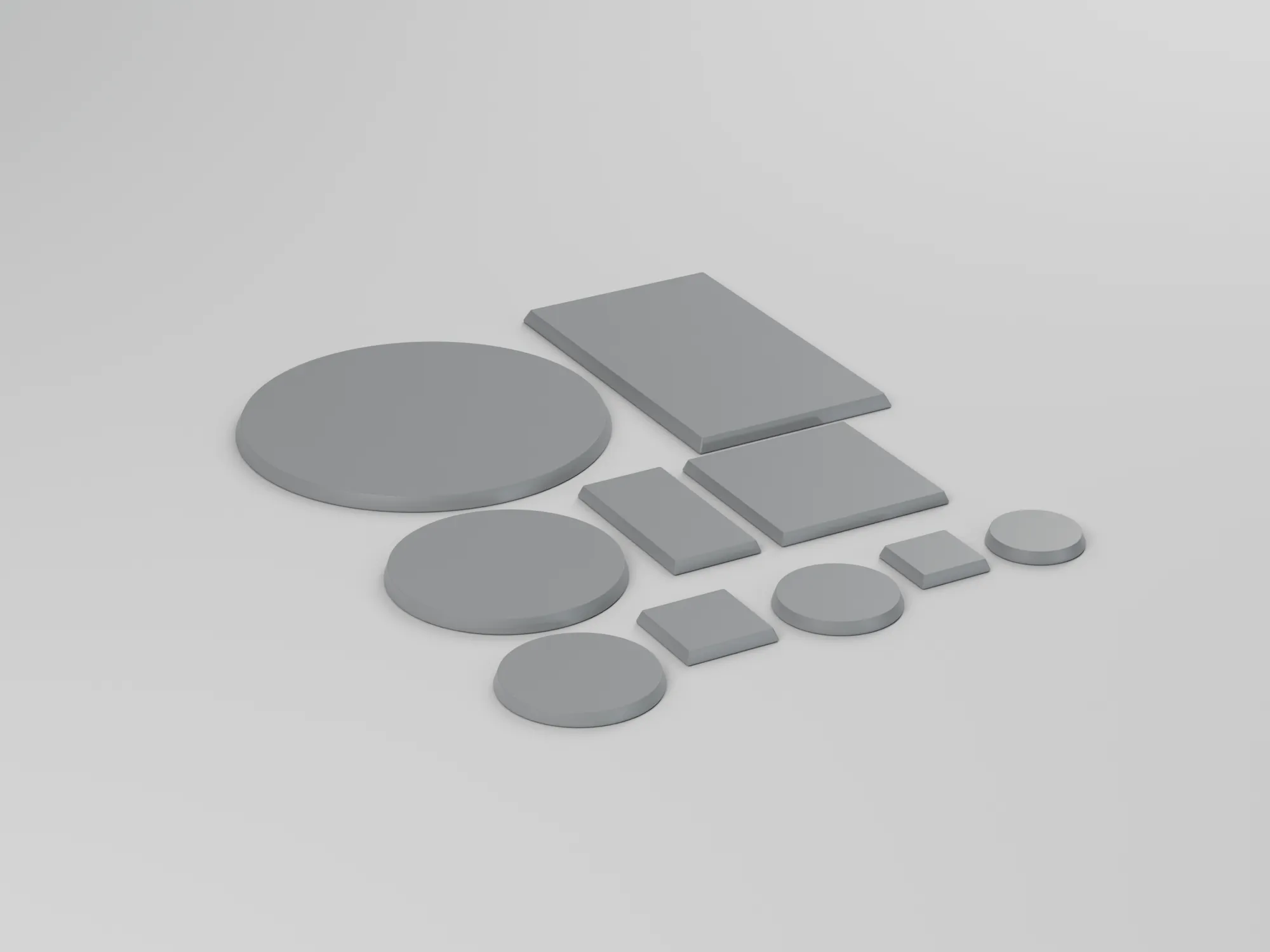
Plain base set – round 25–160, square 20–50, rectangular 25×50 to 60×100 mm
Tabletop accessories
€1.49

3D print files for tabletop accessories in common nominal sizes: bases, movement trays for rank & flank, converters for larger bases and flight stands with a plug-in socket. Real bases differ from their nominal size by up to about 1 mm depending on the maker, so print the free fit test set first.
The parts follow nominal sizes, not a manufacturer. There is no standard for tabletop bases; the nominal sizes are convention. Common sizes are round 25, 28.5, 32, 40, 50 and 60 mm, square 20, 25, 30, 40 and 50 mm, rectangular 25×50, 30×60 and 40×60 mm, and ovals from 60×35 to 170×109 mm. Each tray set belongs to one base size and contains every row depth and width, each size as a separate file; you only print what you need.
The nominal sizes come from retailer tables of the common plastic bases. For the real foot size of a base we could only find one public measuring template, and it does not name the manufacturer. It is one source, not a measure for every maker: real bases differ from their nominal size by up to about 1 mm depending on the manufacturer (large round bases somewhat more), squares and rounds mostly smaller, some ovals larger, meaning wider. Each product page states what is nominal, what is measured and what is estimated; estimated values are marked as estimates.
You can measure yourself: take a caliper and measure your base at the foot, that is the lower edge, not at the top surface. Because of the sloped edge the top surface is usually 1 to 3 mm smaller. If your value differs from the nominal size, the free fit test set further down helps.
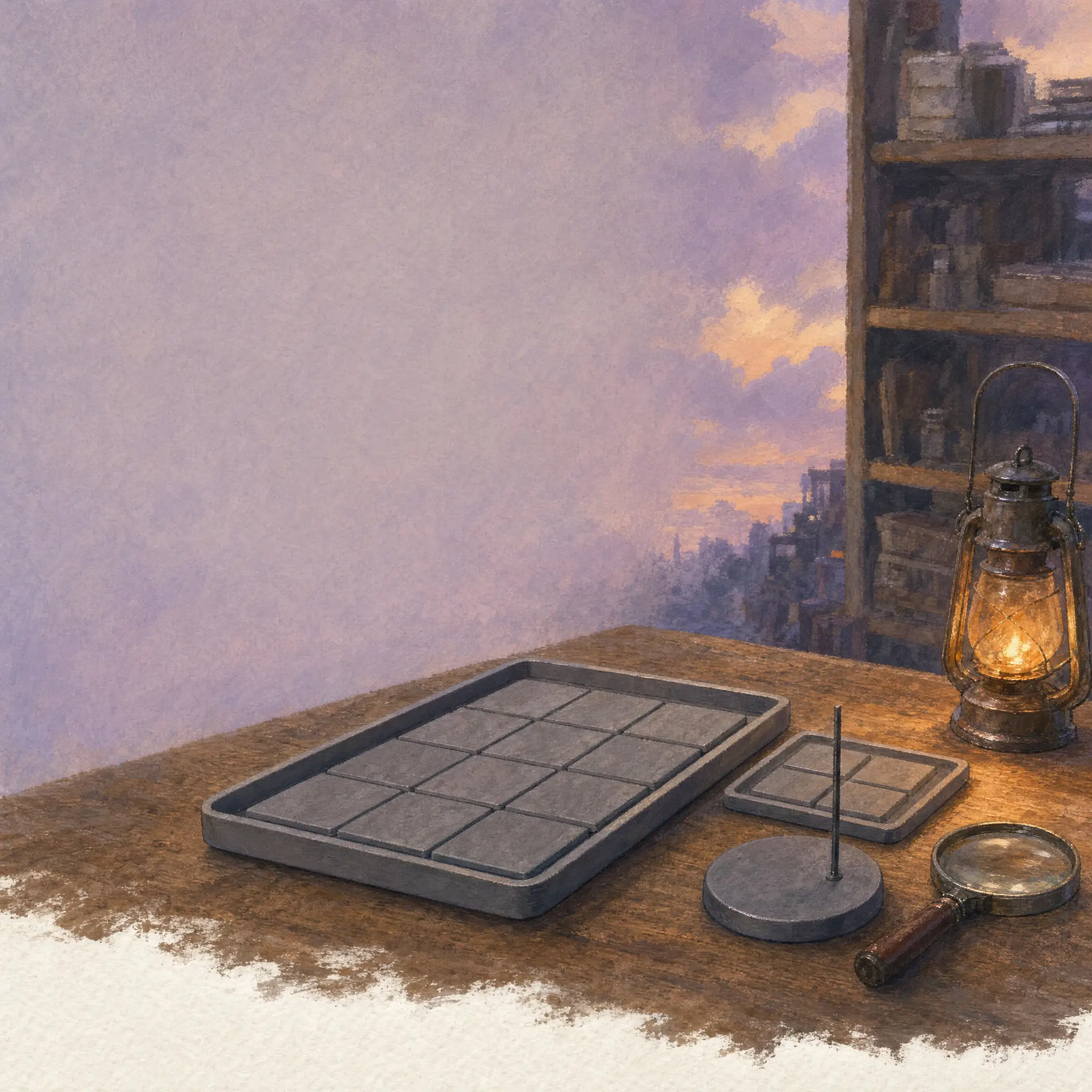
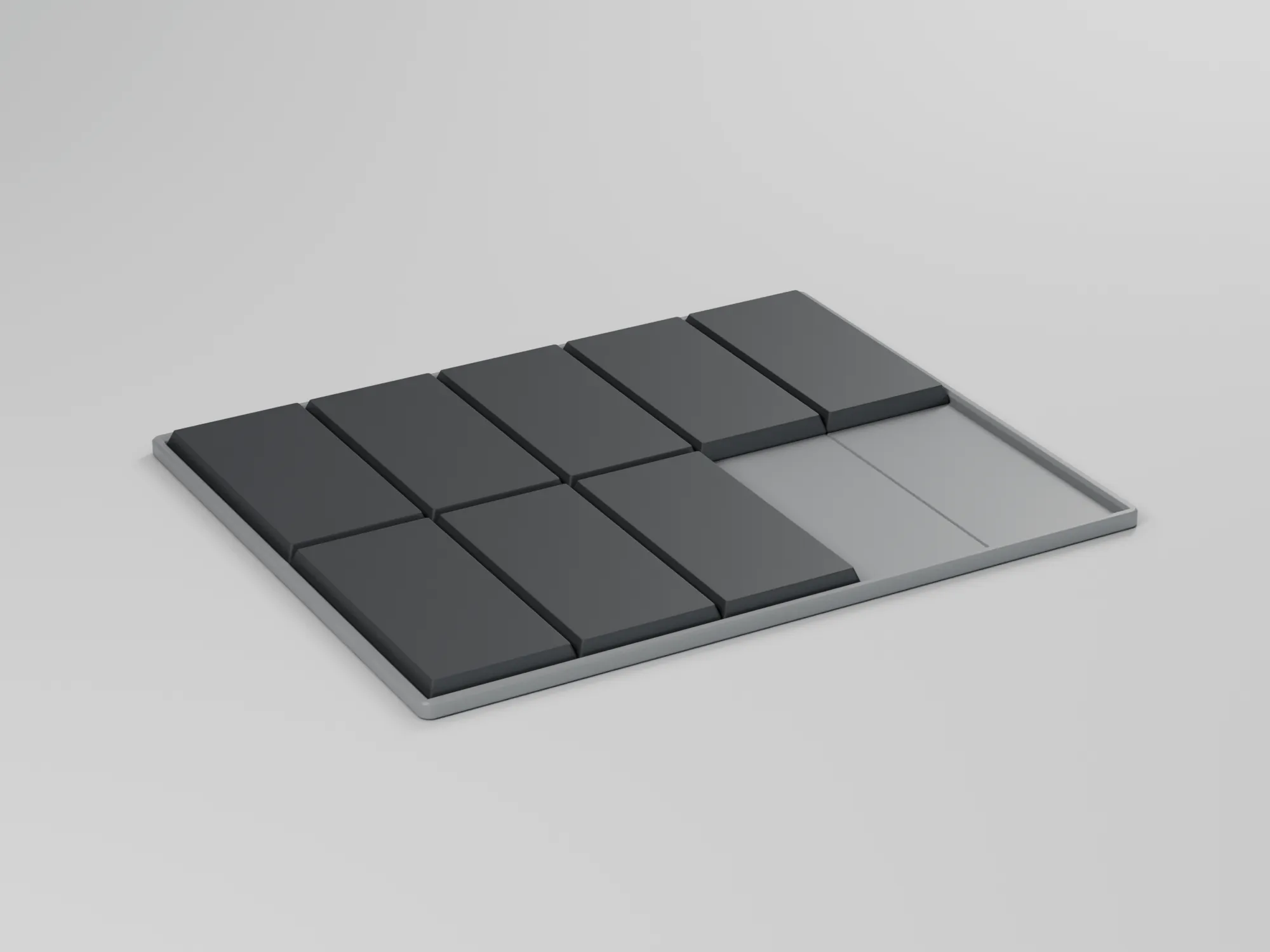
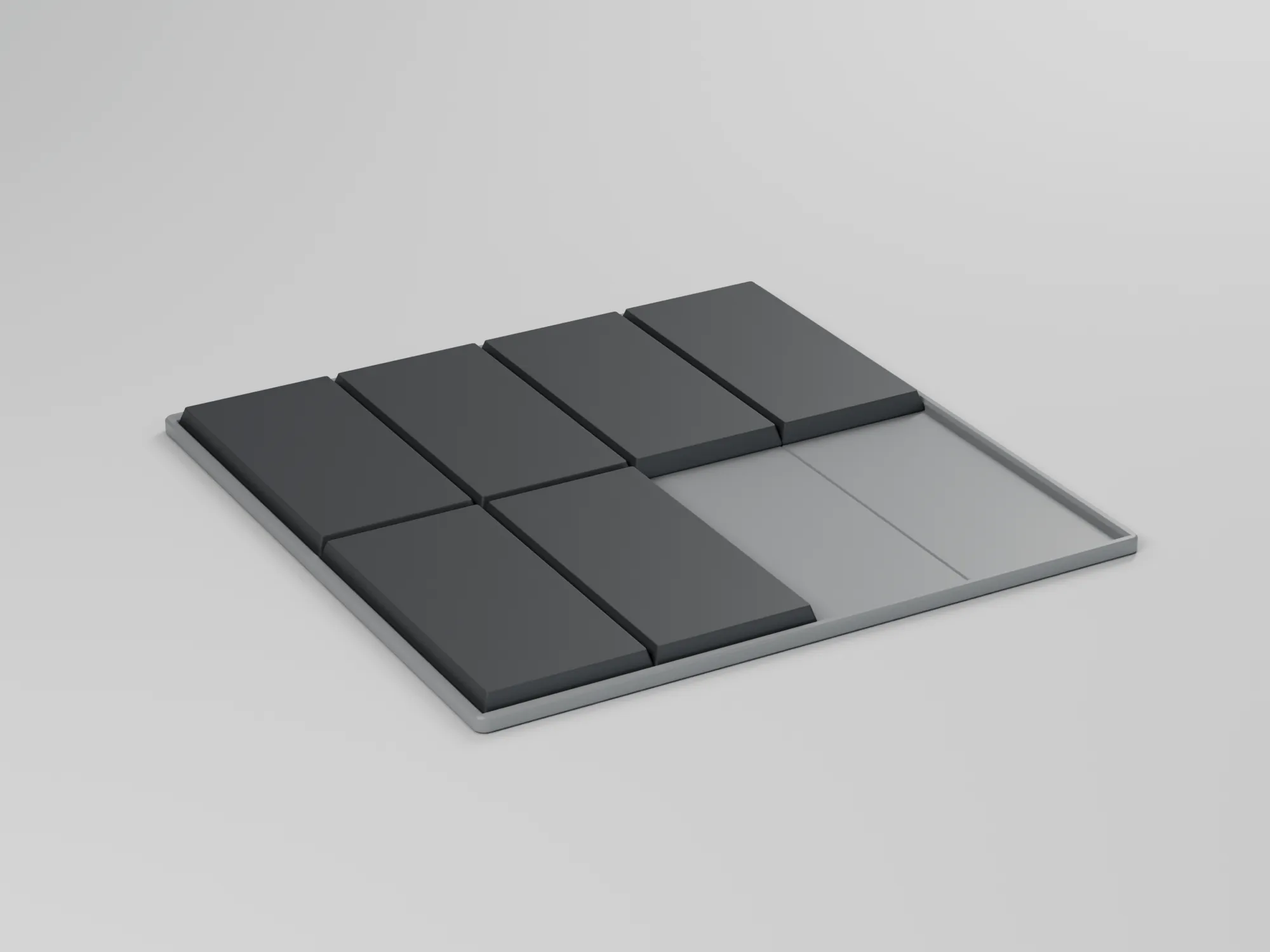
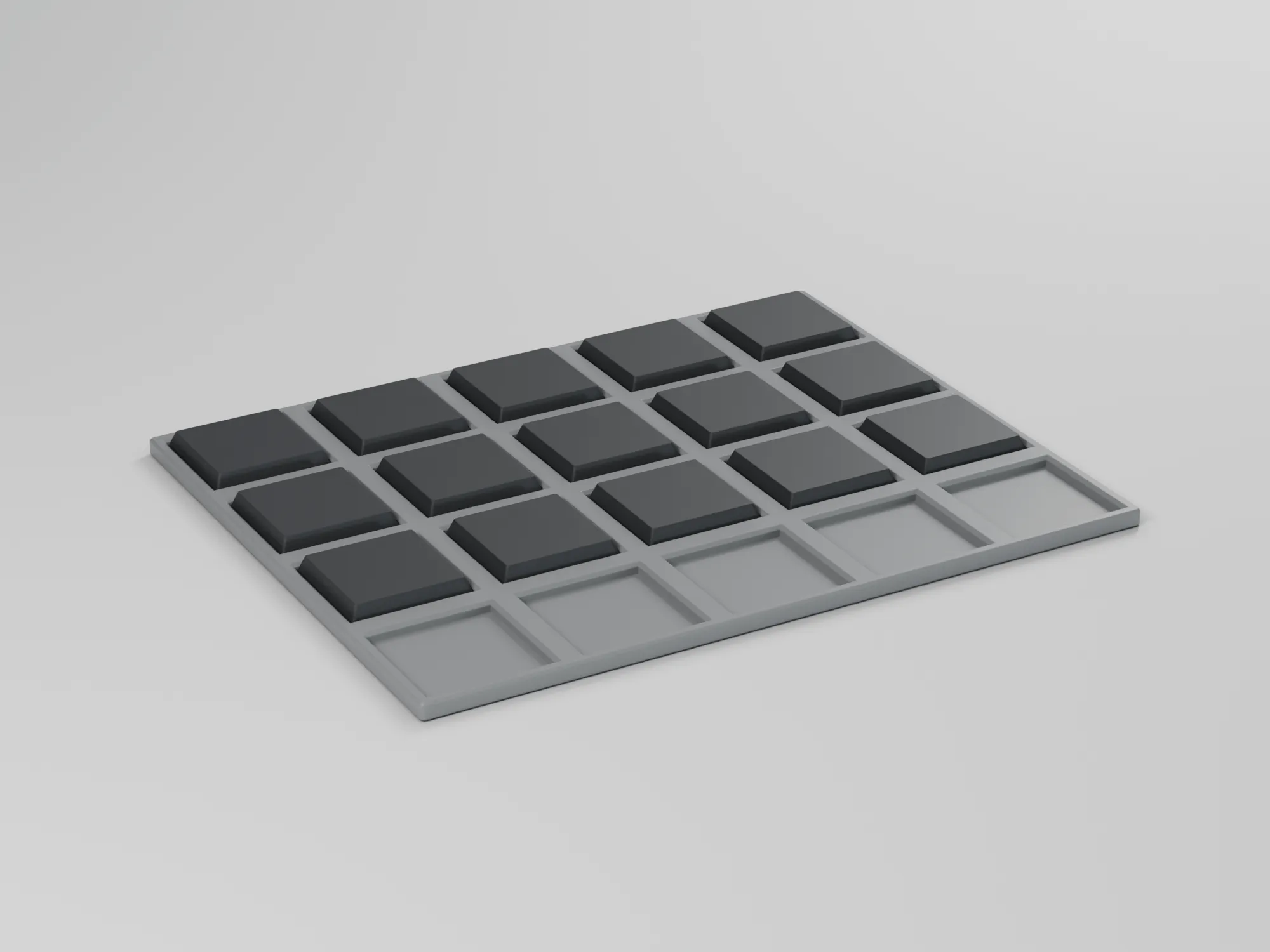
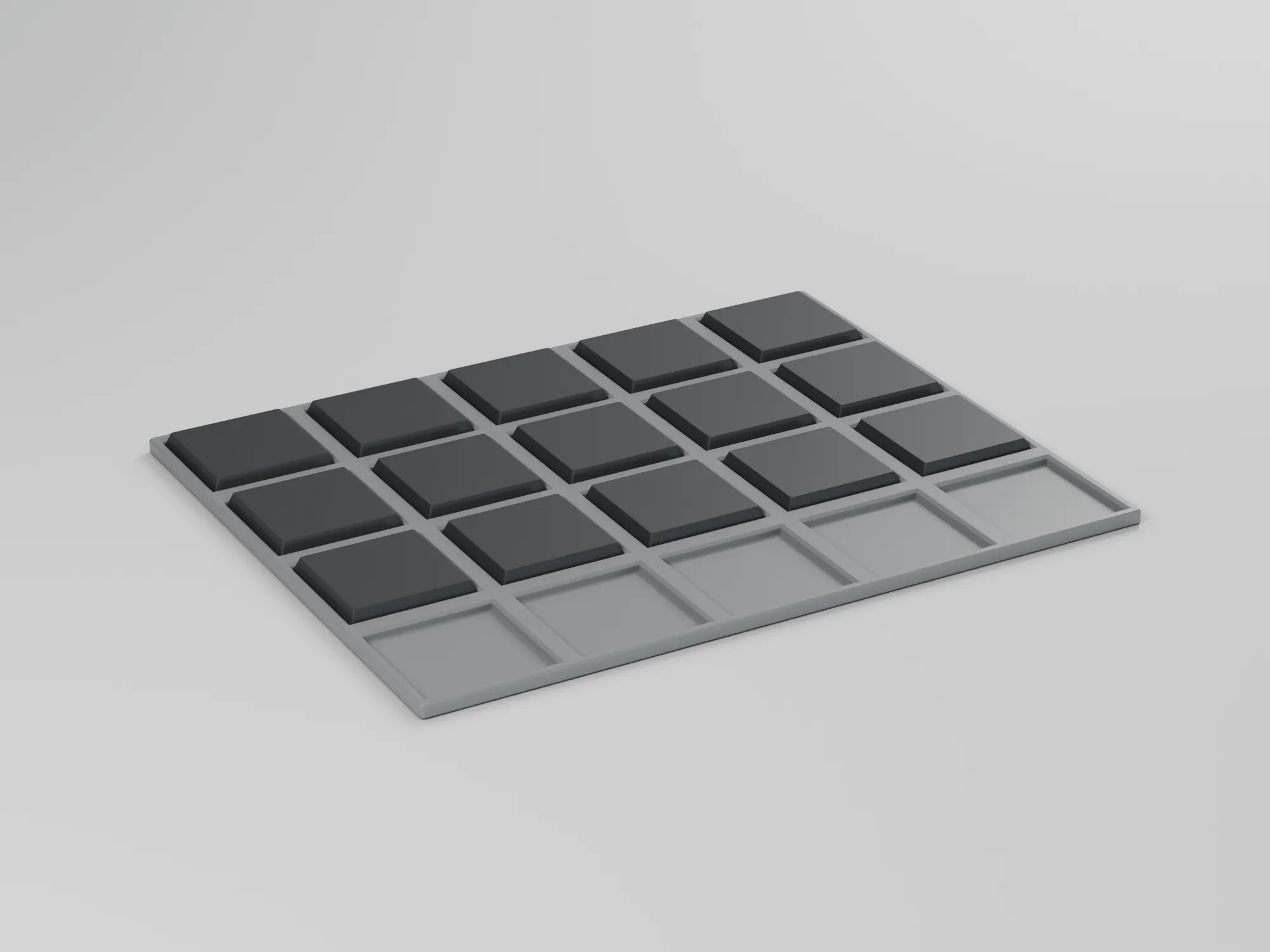
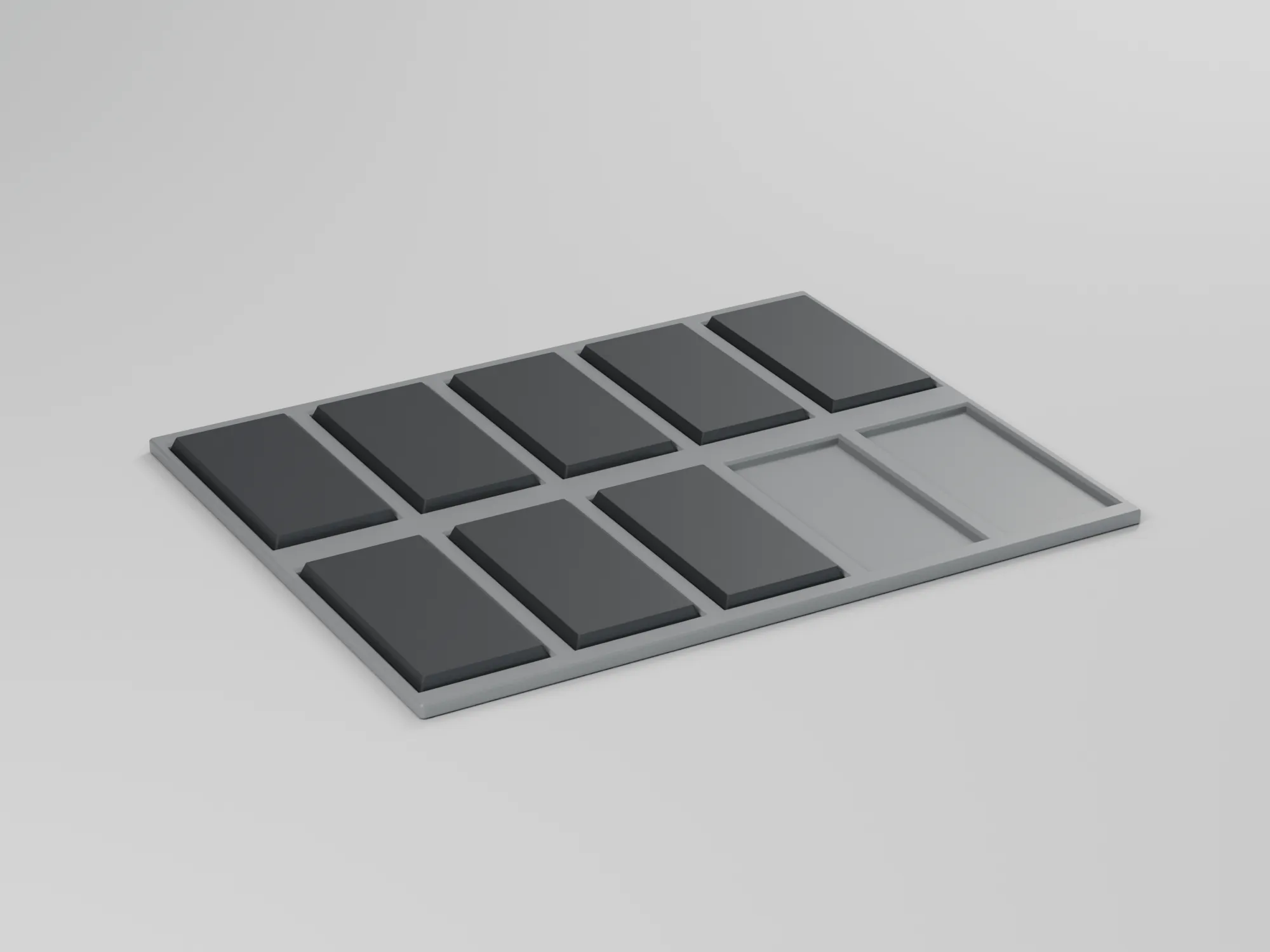
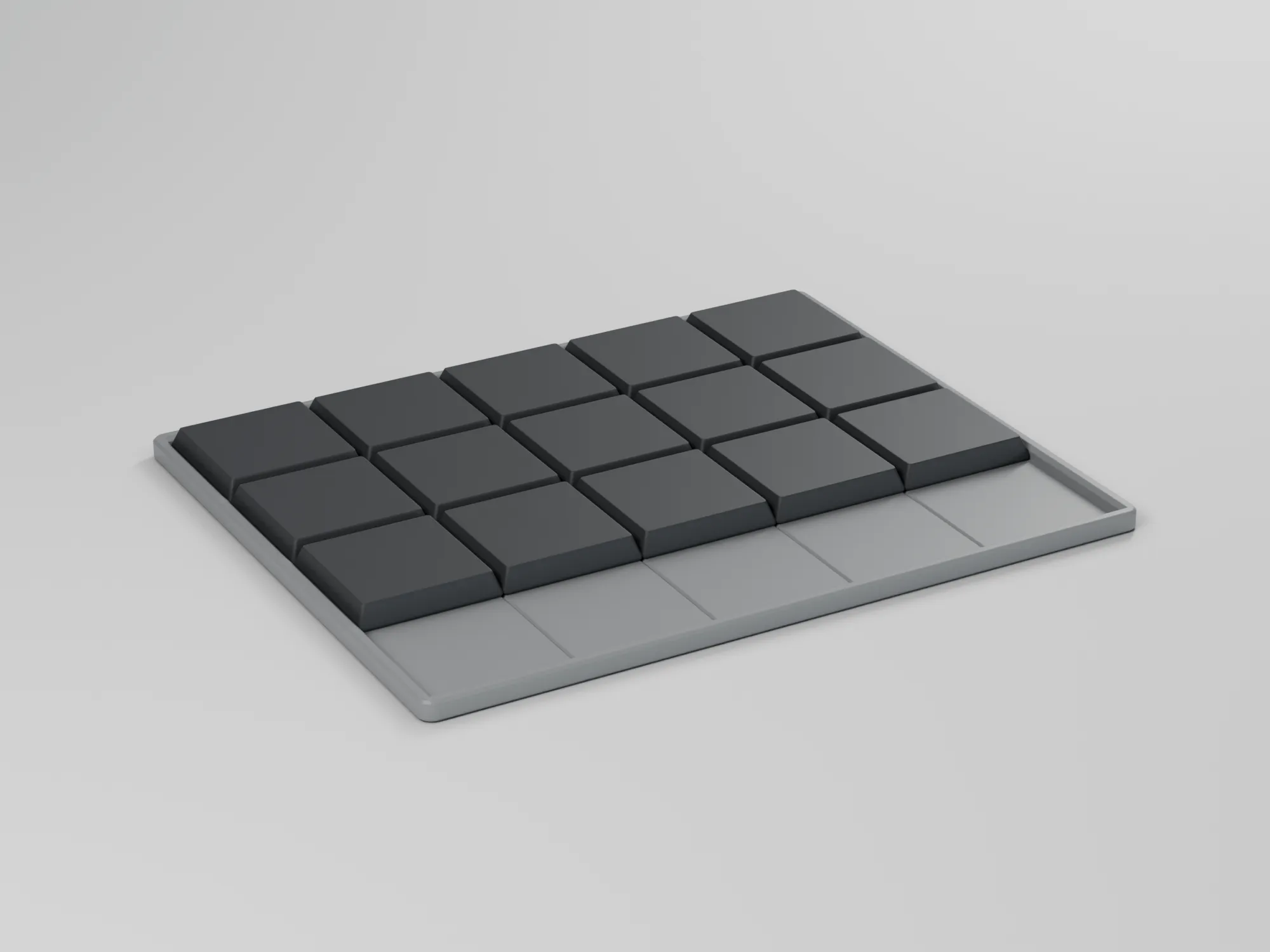
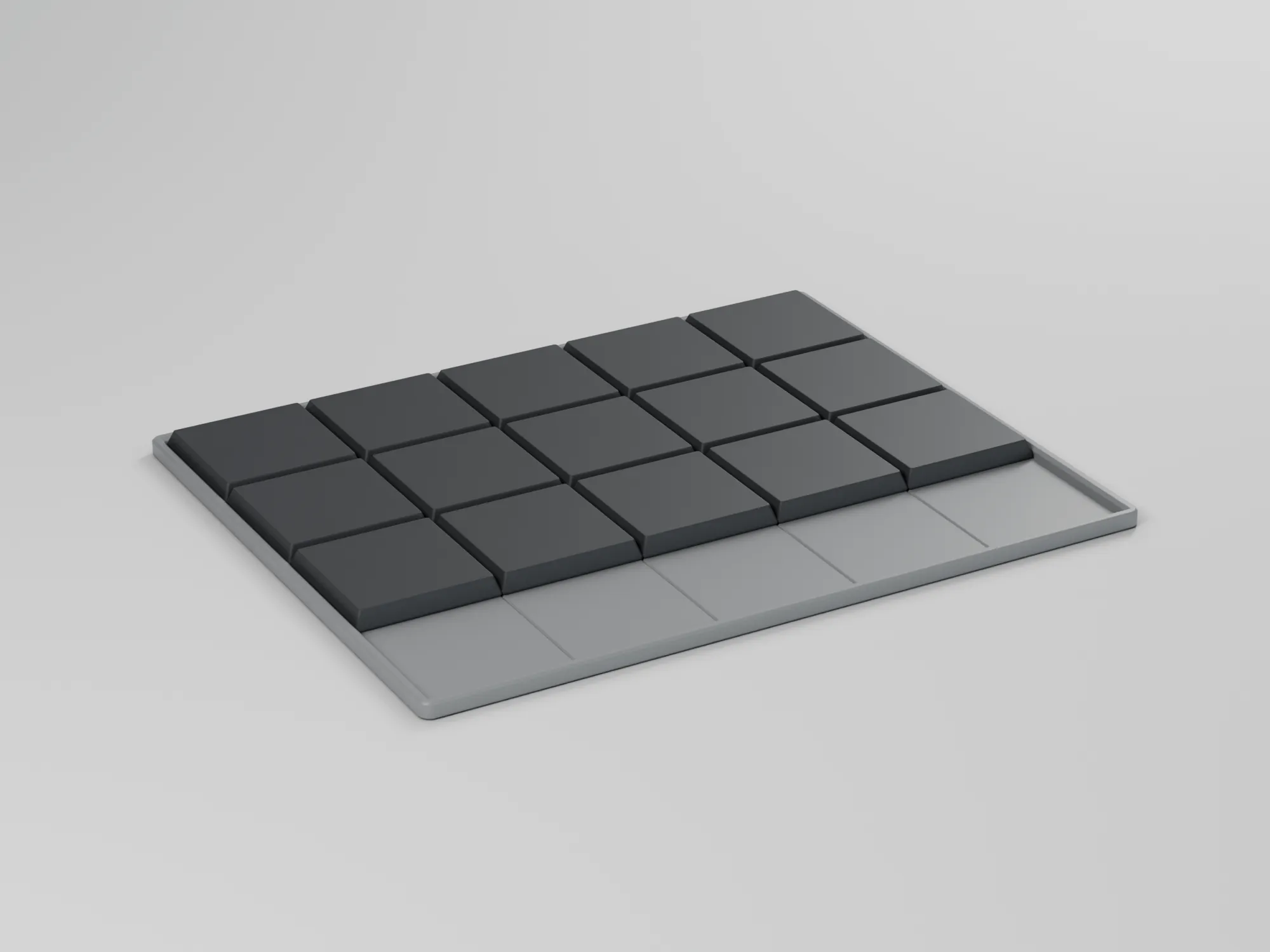
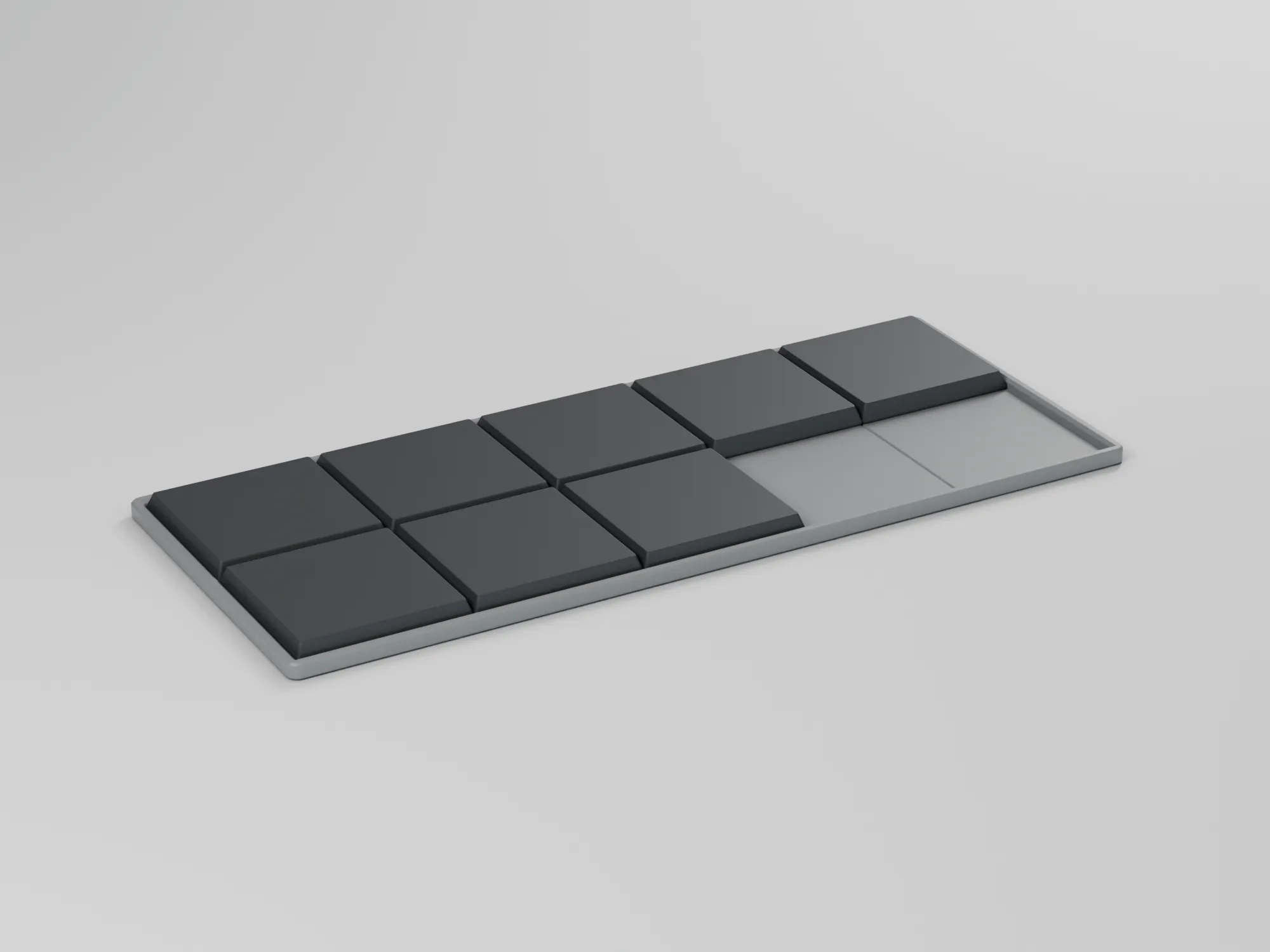
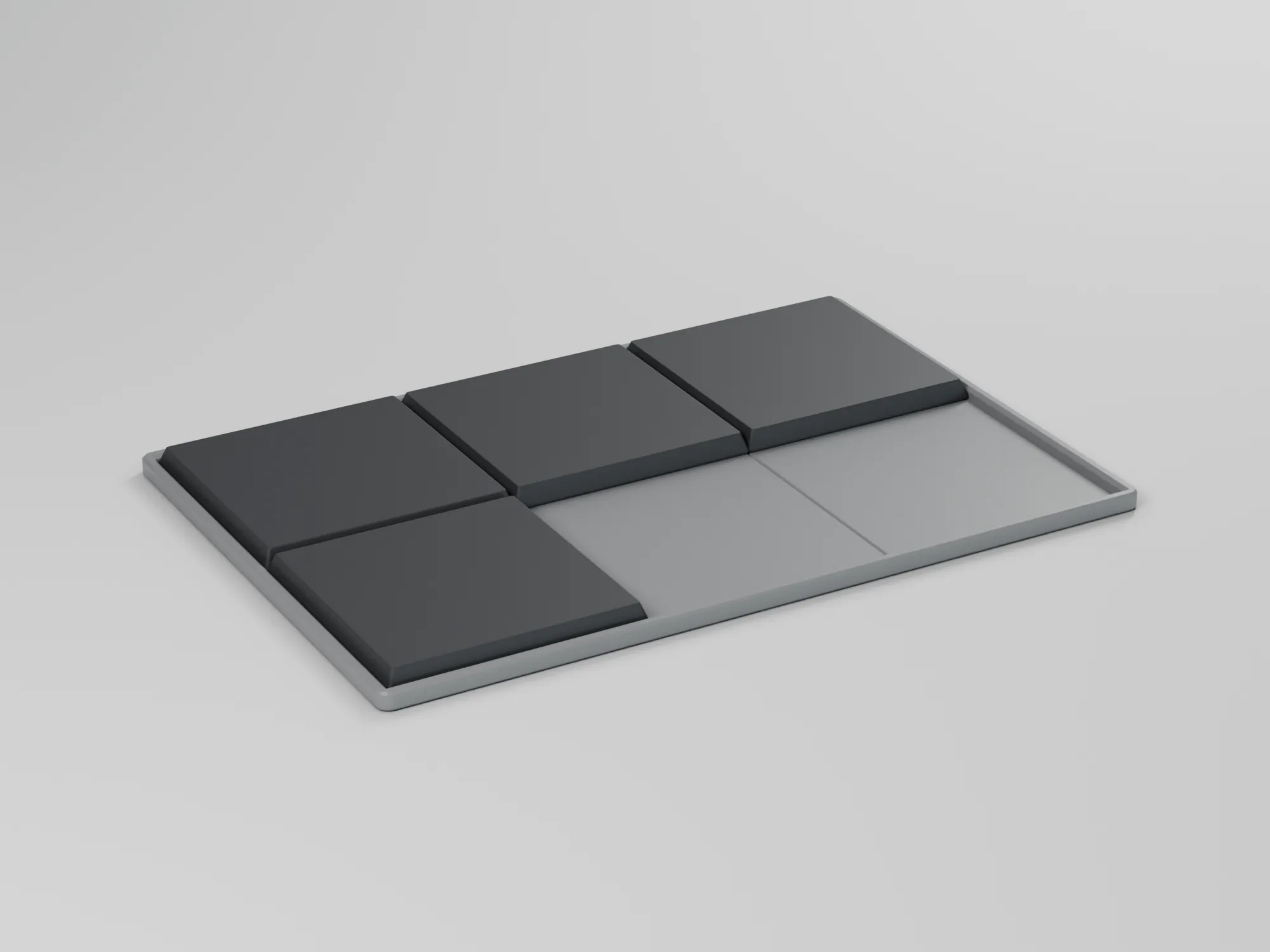
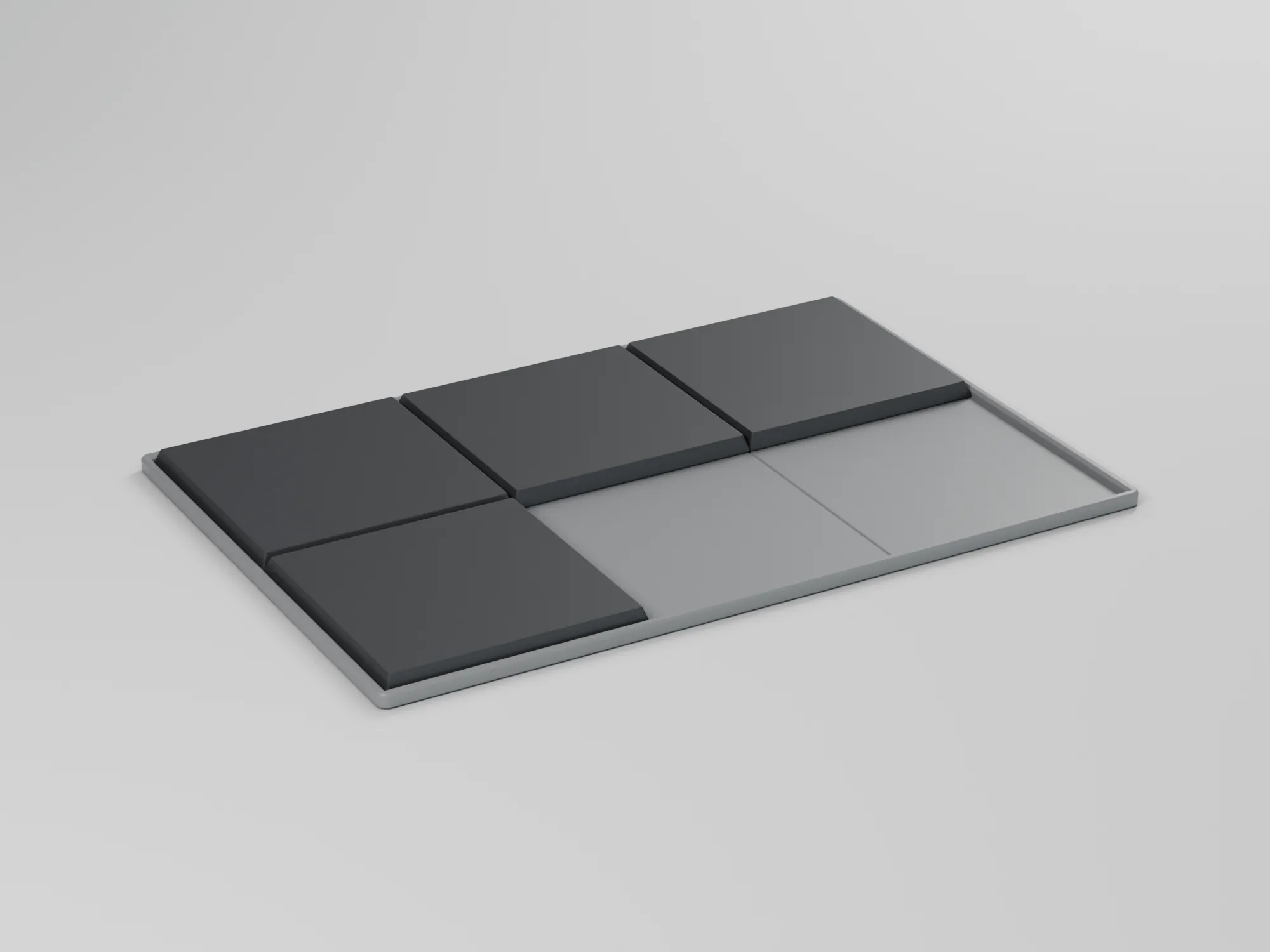
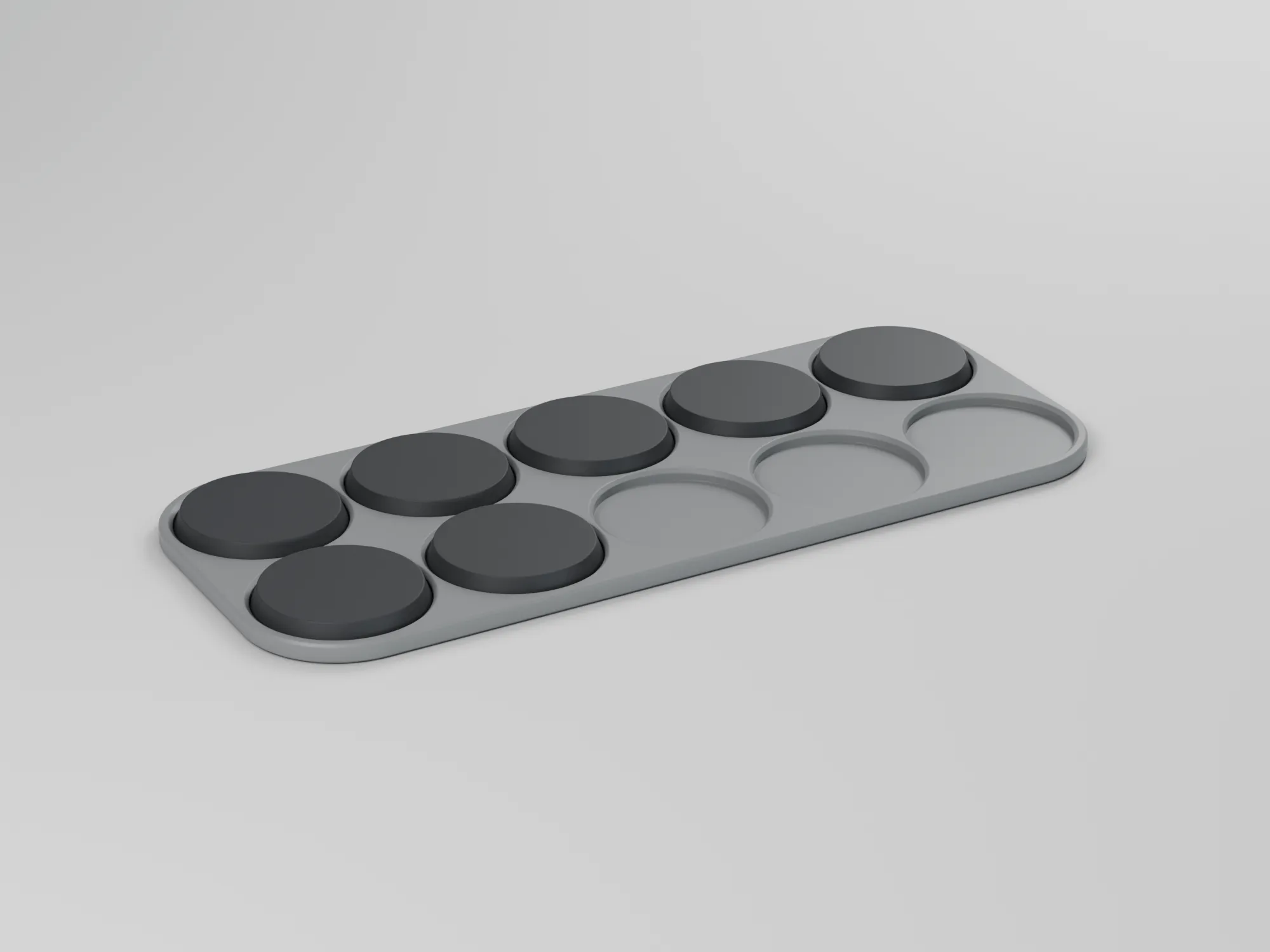
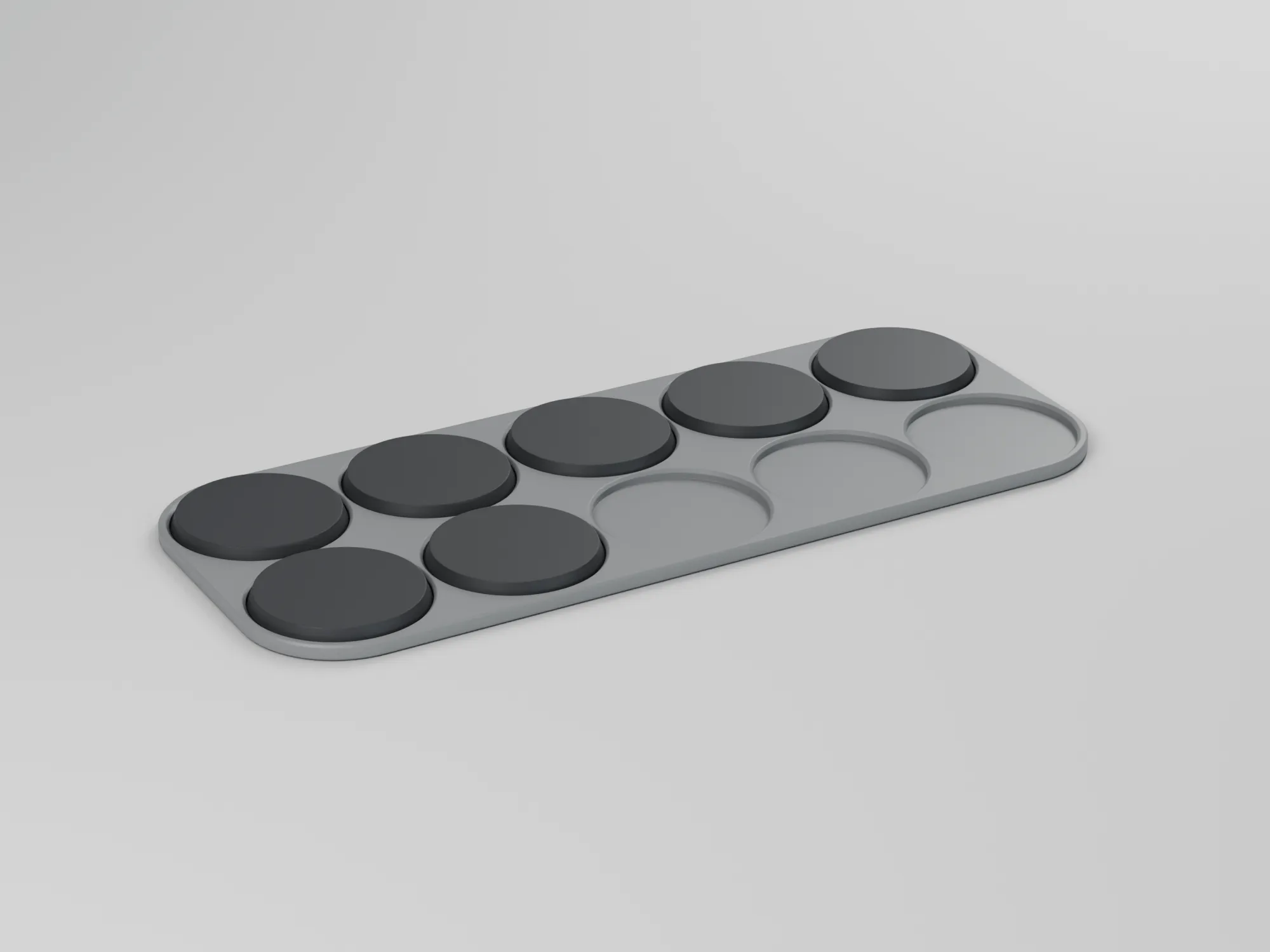
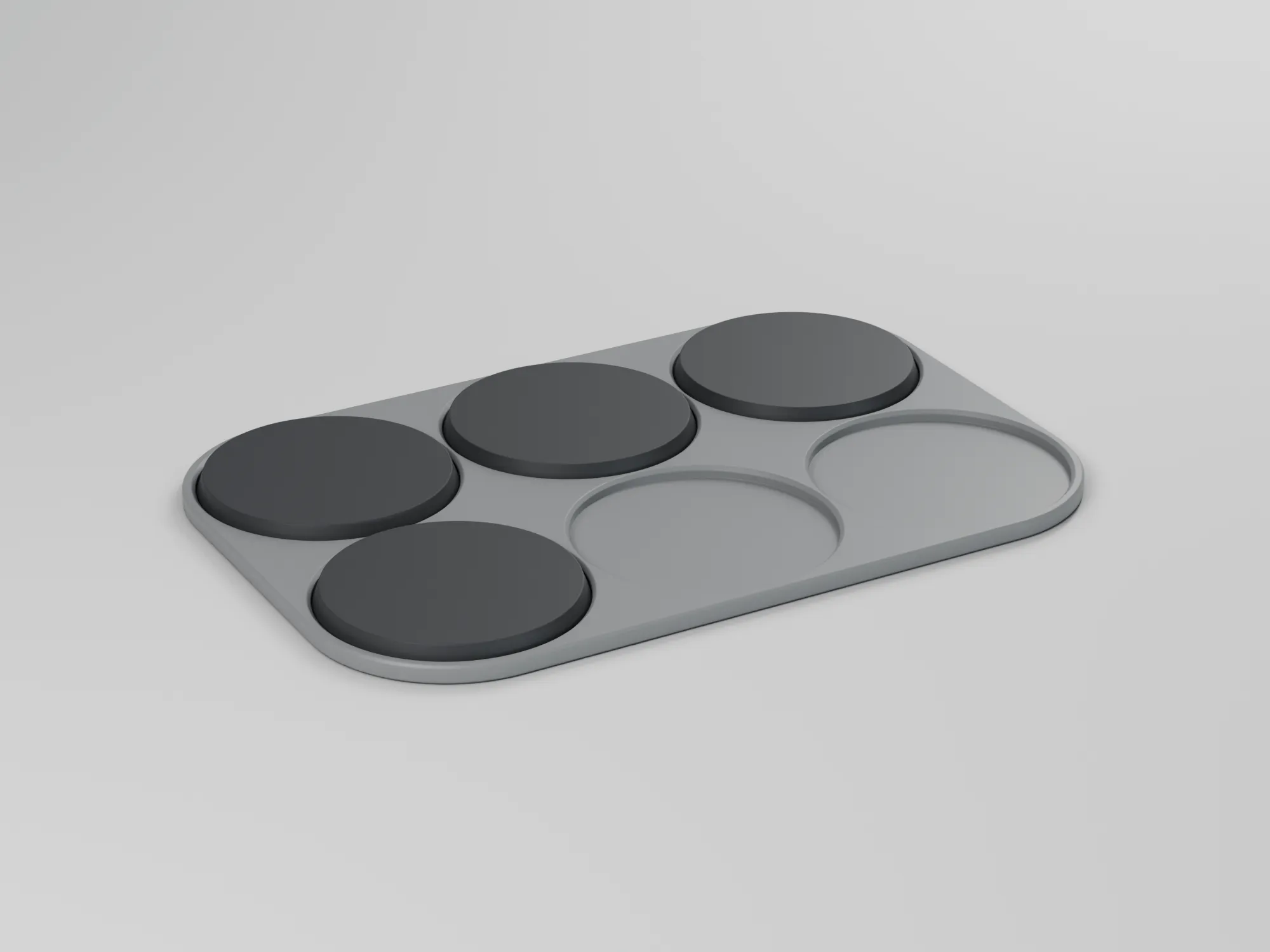
Movement trays (class A, rank & flank): one continuous trough for whole formations, for square bases 20×20, 25×25, 30×30, 40×40 and 50×50 mm and cavalry bases 25×50, 30×60 and 40×60 mm, 2 to 10 bases wide and 1 to 5 rows deep, depending on the base size. Also skirmish trays for round bases of 25, 32 and 40 mm in rows and in a staggered layout; for 25 mm the set also includes trays on a square grid. Trays longer than 200 mm consist of two segments joined with a dovetail; a drop of glue helps if needed.
Converters: plates that hold smaller bases and behave like larger ones (20 to 25 mm, 25 to 30 mm, 25×50 to 30×60 mm), as a single adapter, a row or a block; also round-to-square converters for 25 to 30, 32 to 40 and 40 to 50 mm. We do not make other pairings where the wall would be too thin for FDM. The plate has the outer size of the target bases minus 0.2 mm, so it is designed to fit into our trays for the larger base.
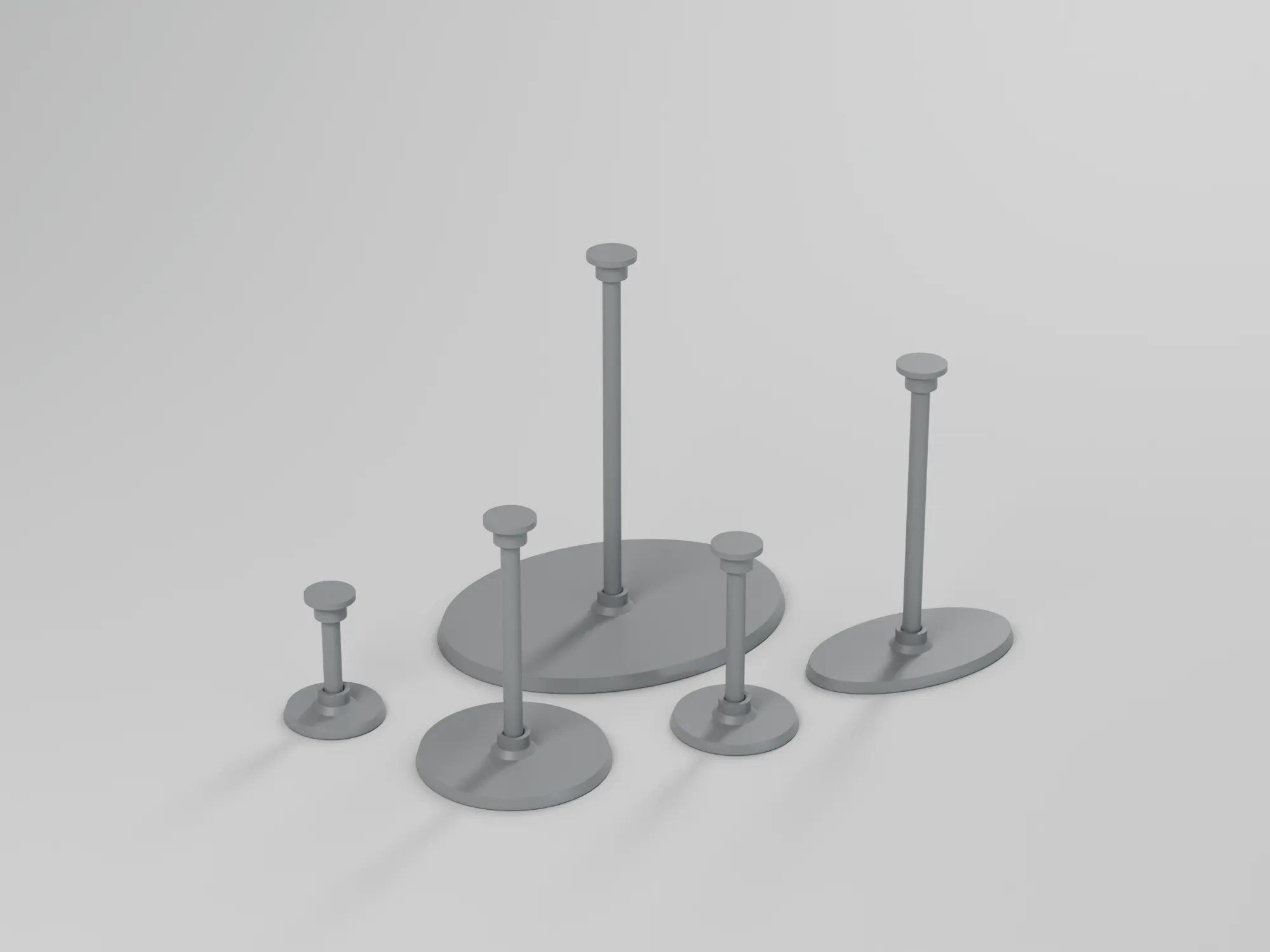
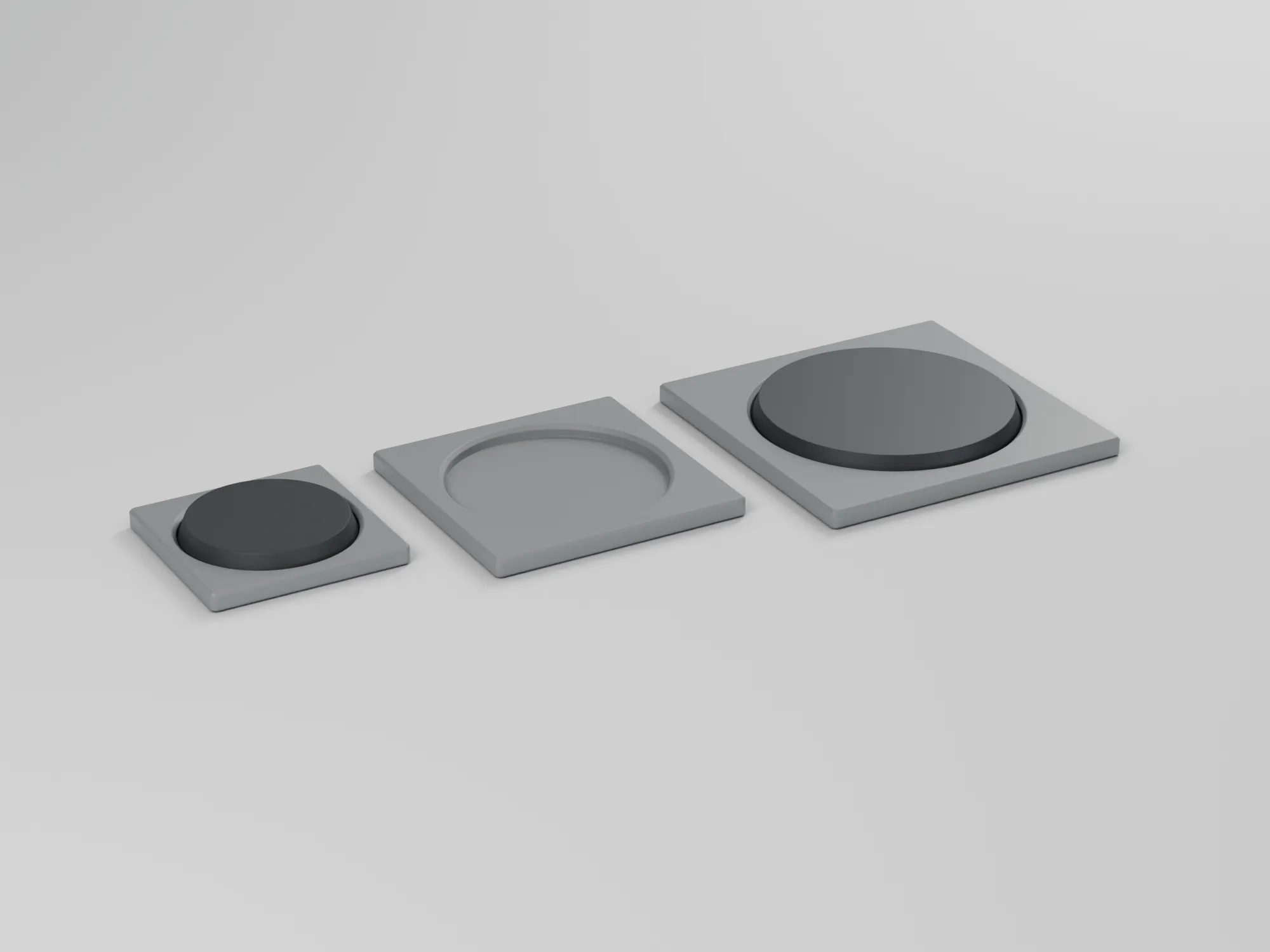
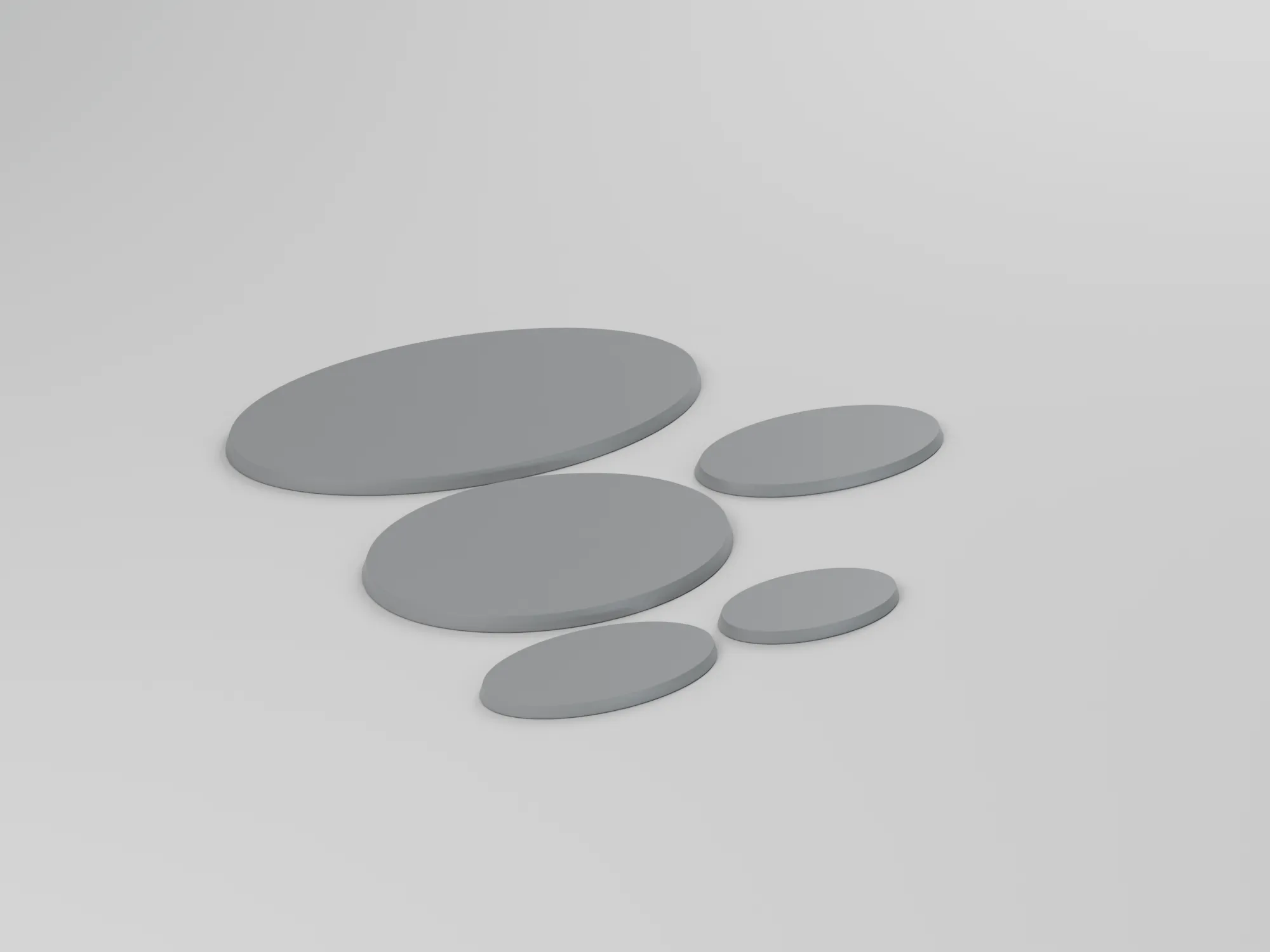
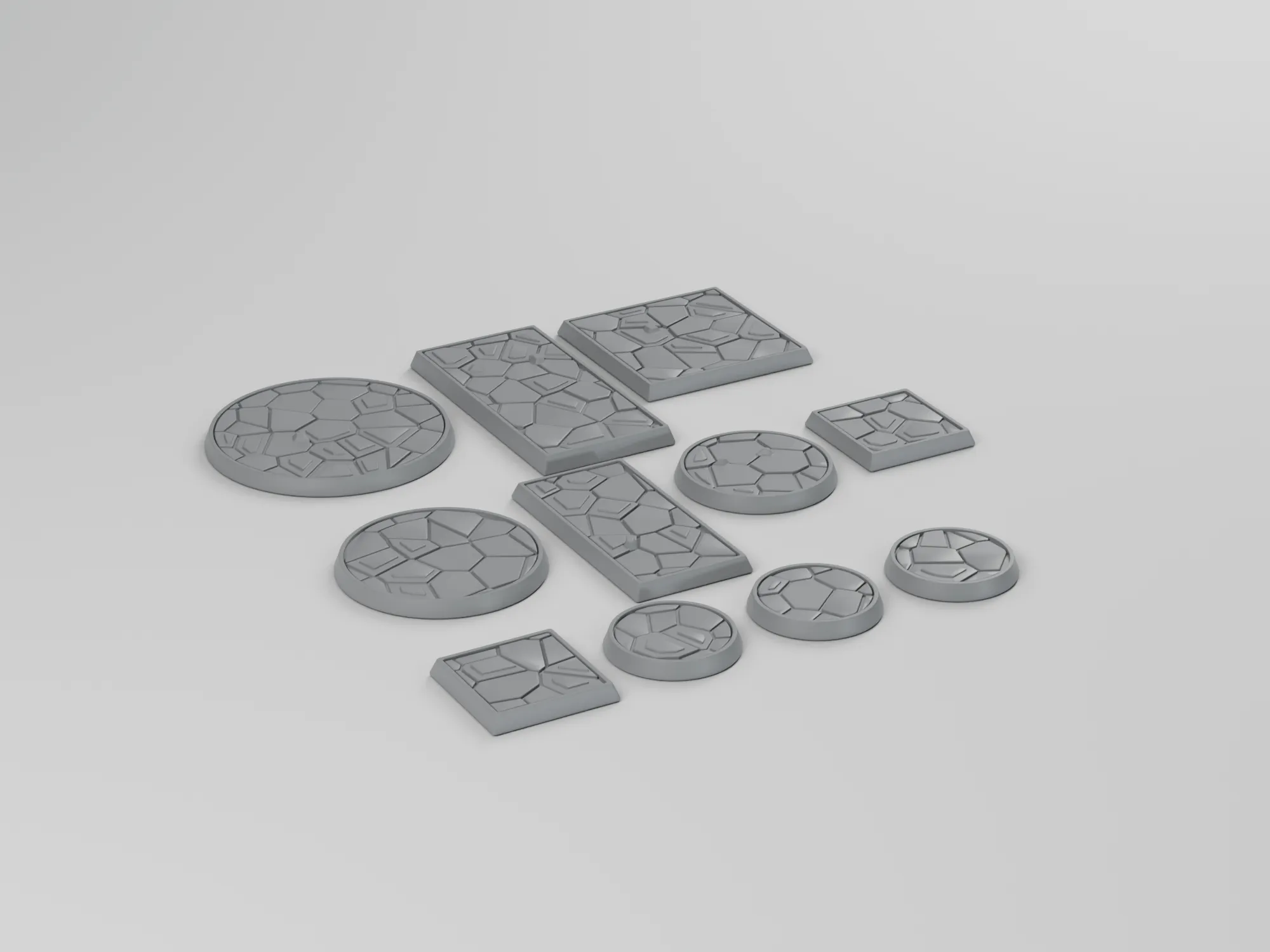
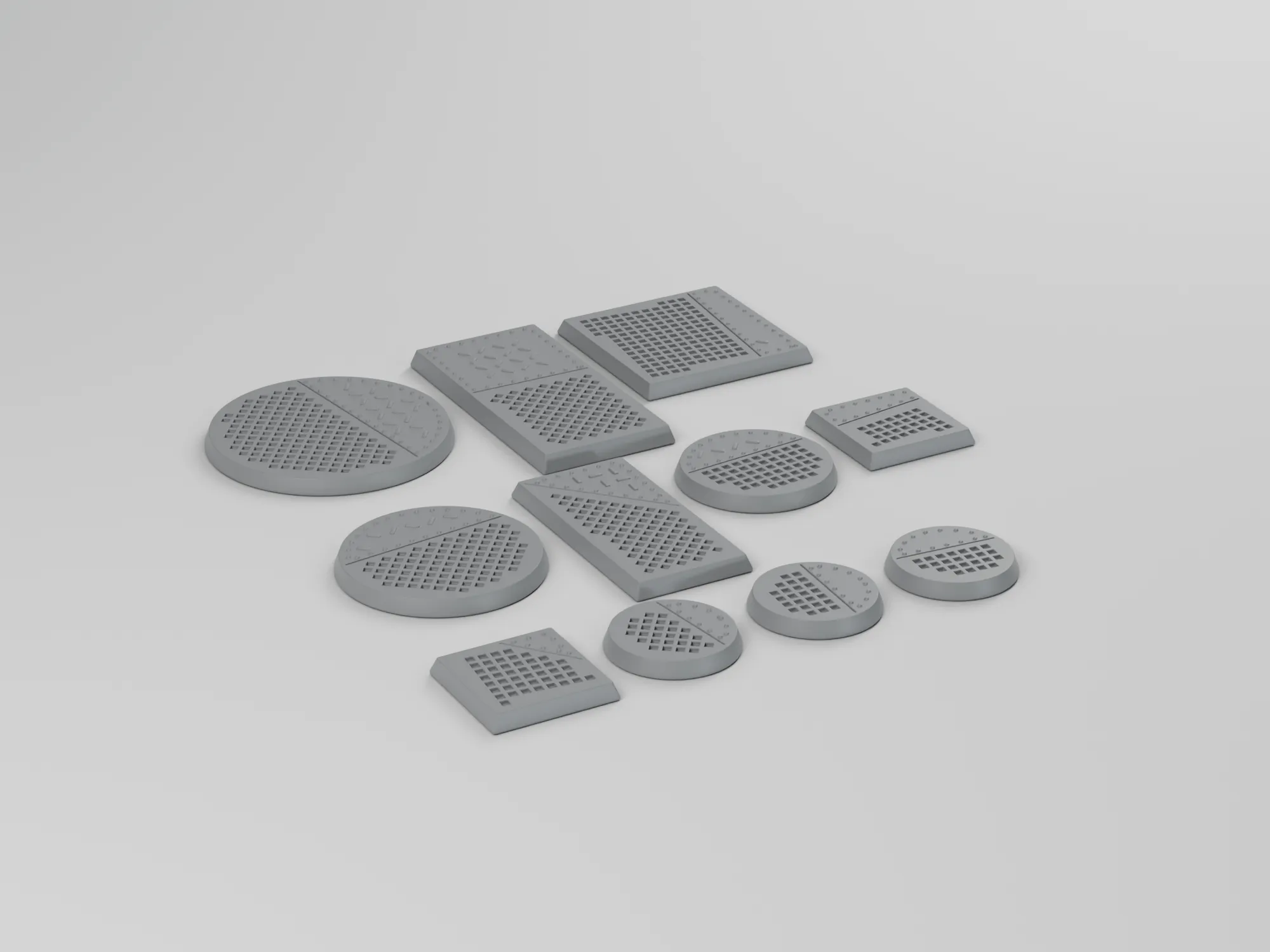
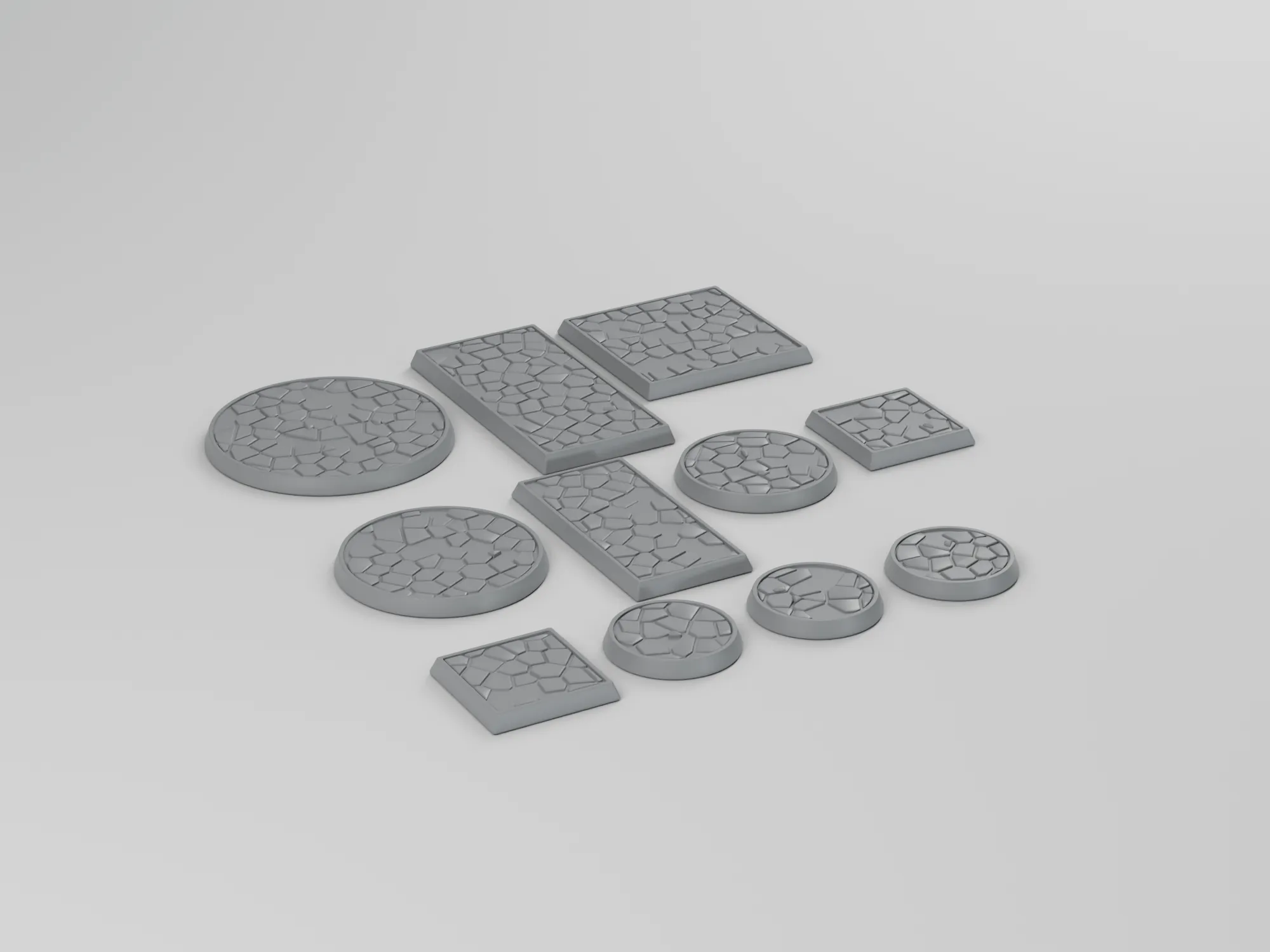
Bases and flight stands: our own smooth bases round (25 to 160 mm), square (20 to 50 mm) and rectangular (25×50 to 60×100 mm), plus ovals from 60×35 to 170×109 mm; flight stands round 32, 40 and 60 mm and oval 75×42 and 120×92 mm with a plug-in socket, plus printed rods of Ø 6 mm in heights from 40 to 127 mm with a head adapter to glue under the figure. Rods from the trade (brass or acrylic, 3 mm) are not included. Textured bases (cobblestone, rock, slate and grating) come in round, square and rectangular shapes, every size in three pattern variants.
No magnets are planned: the bases are held by the trough. Figures are not part of the range; our images show only placeholder bases. The range is released step by step; the list on this page shows which files are already available.
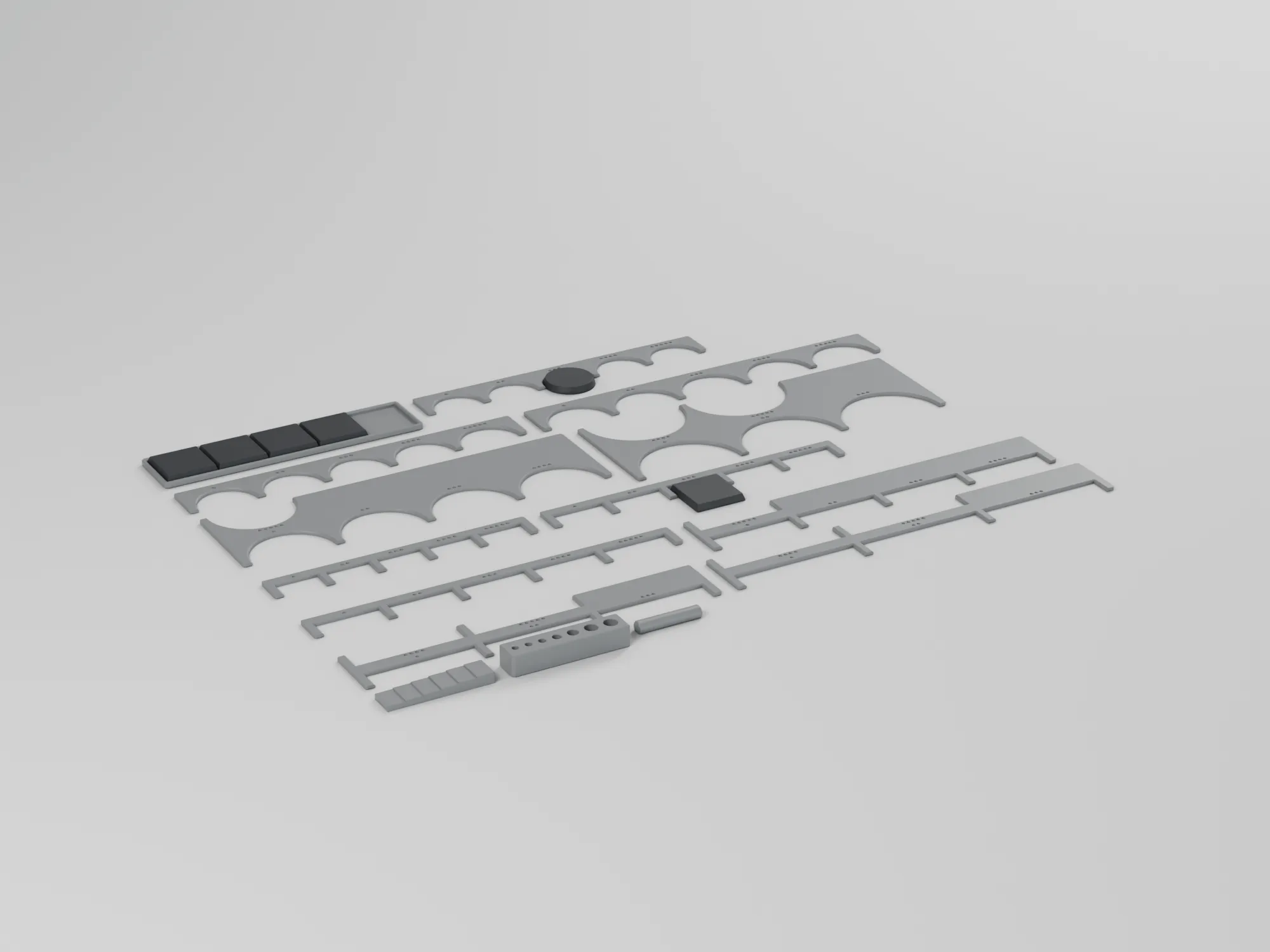
The fit test set is free and lowers the fit risk for all the other parts. It consists of small separate pieces, and you only print your own sizes: one comb per size for round bases (25, 28.5, 32, 40 and 50 mm) and for straight edges (20, 25, 30, 40, 50 and 60 mm, for squares up to 50 mm and both sides of 25×50, 30×60 and 40×60 mm), all in clearance steps from 0 to 0.8 mm. There is also a height ladder from 2.5 to 5 mm, a hole strip for rods (Ø 3.0 to 6.2 mm), a Ø 6 mm rod sample and a row sample whose continuous trough takes five 25 mm bases. A 25 mm starter plate puts the most important samples on one print bed.
How to use it: put your bases into the combs and find the step in which they sit flat without jamming. The height ladder helps you work out how tall your bases are, and the hole strip shows which hole suits your rod. The row sample shows how a whole row behaves in the trough.
Our troughs are designed for the nominal size plus 0.4 mm in total (0.2 mm per side), with a lead-in chamfer at the edge. If your bases are smaller than the nominal size they sit looser; if they are wider, as some ovals are, you need more clearance. The test set shows you that before you print a whole tray. It is an aid: how accurate it comes out depends on your printer.

Trays, converters, smooth bases, flight stands and the test set (class A) are printed with FDM in PLA and a 0.4 mm nozzle; PETG works too. Walls are at least 1.2 mm thick, 1.6 mm where possible. The parts are designed to print without supports: trays and converters lie flat with the trough facing up, and the rods of the flight stands are printed lying down. Trays longer than 200 mm are made of two segments so that they fit common print beds (from about 220 mm).
Textured bases (class B) with cobblestone, rock, slate and grating patterns have fine detail on the top surface, and their walls and structures can be thinner than 1.2 mm (at least 0.6 mm). We recommend resin for them; FDM with a 0.2 mm nozzle and a fine layer height is the alternative. Foot and edge are smooth, and the foot sizes match those of the smooth bases.
With resin: wear gloves, follow the resin manufacturer's instructions and cure the parts fully. Also make sure the room is well ventilated. How accurately the parts come out for you depends on your printer; the free fit test set settles that beforehand.
Tabletop accessories
€1.49
Tabletop accessories
€2.49
Tabletop accessories
€2.49
Tabletop accessories
€2.90
Tabletop accessories
€2.49
Tabletop accessories
€2.49
Tabletop accessories
€2.49
Tabletop accessories
€2.49
Tabletop accessories
€2.49
Tabletop accessories
€2.49
Tabletop accessories
€2.49
Tabletop accessories
€2.49
Tabletop accessories
€2.49
Measure the base with a caliper at the foot, that is the lower edge, and match the value to the nearest nominal size: for round bases about 25, 28.5, 32, 40 or 50 mm, for square bases 20, 25, 30, 40 or 50 mm. Rectangular bases are named by width × length, for example 25×50 or 30×60 mm. The matching tray set belongs to the same nominal base and contains every row depth. If your value falls between two nominal sizes or differs from one, print the free fit test set first.
The trough is designed for the nominal size plus 0.4 mm in total (0.2 mm per side) and has a small lead-in chamfer on the inside. That is our design assumption, not a standard. Real bases are usually a little smaller than their nominal size and then sit looser; some ovals are up to about 1 mm wider and need more clearance. The free fit test set has combs in several clearance steps, so you can find out what suits your bases and your printer.
With single pockets the clearance of every pocket would add up, to 4 mm for ten bases at 0.4 mm each. Formation games, however, often measure by the contact between bases. That is why every rank & flank tray has one continuous trough: the bases sit edge to edge, as in the formation. The trough is 1.8 mm deep and the rim is 2 mm wide at the top. No magnets are planned; the trough guides the bases. It is not a transport case: bases can slide out if you tilt it.
A converter is a plate with pockets for smaller bases that behaves as a whole like larger bases. You need one when you want to move a unit from a smaller to a larger base format without re-basing: from 20 to 25 mm or from 25 to 30 mm square, for cavalry from 25×50 to 30×60 mm. The plate has the outer size of the target bases minus 0.2 mm and is designed to fit into our trays for the larger base. There are also single adapters from round to square (25 to 30, 32 to 40, 40 to 50 mm). Other pairings are missing where the wall would be too thin for FDM.
Flight stands (round 32, 40 and 60 mm, oval 75×42 and 120×92 mm) have a plug-in socket; the set contains both hole sizes: Ø 3.2 mm for 3 mm (1/8 inch) rods from the trade and Ø 6.2 mm for our printed rods of Ø 6 mm. The rods come in heights of 40, 60, 80, 100 and 127 mm, plus a head adapter to glue under the figure. Brass or acrylic rods of 3 mm are not included and come separately. How firmly a rod sits depends on your printer; the hole strip in the fit test set shows which hole suits you.
Trays, converters, smooth bases, flight stands and rods work with FDM in PLA and a 0.4 mm nozzle; PETG works too. The textured bases with fine patterns on the top surface are meant for resin; FDM with a 0.2 mm nozzle is the alternative. With resin: wear gloves, follow the resin manufacturer's instructions and cure the parts fully. Also make sure the room is well ventilated.
No. We build by base size, not for particular games, and therefore name neither games nor manufacturers; the product pages give only dimensions. Whether a tray suits your game depends on the base size of your units, and which formation your rules require is stated in your rules. Miniatures are not part of the range; our images show only our own placeholder bases. We have no connection to game or base manufacturers.
Our parts have not yet been printed and have not been tested. The nominal sizes come from retailer tables of the common plastic bases, the foot sizes of real bases from one public measuring template; everything else (clearance, trough depth, walls, hole sizes) is our own design specification. Values that are only estimated are marked as estimates on the product page. Real bases differ by up to about 1 mm depending on the manufacturer, large round bases sometimes more; the free fit test set settles that beforehand. The accessories have no connection to game or base manufacturers.