Empty single or double DIN slot: gauges, switches or storage?
What can I fit into an empty single-DIN or double-DIN radio slot?
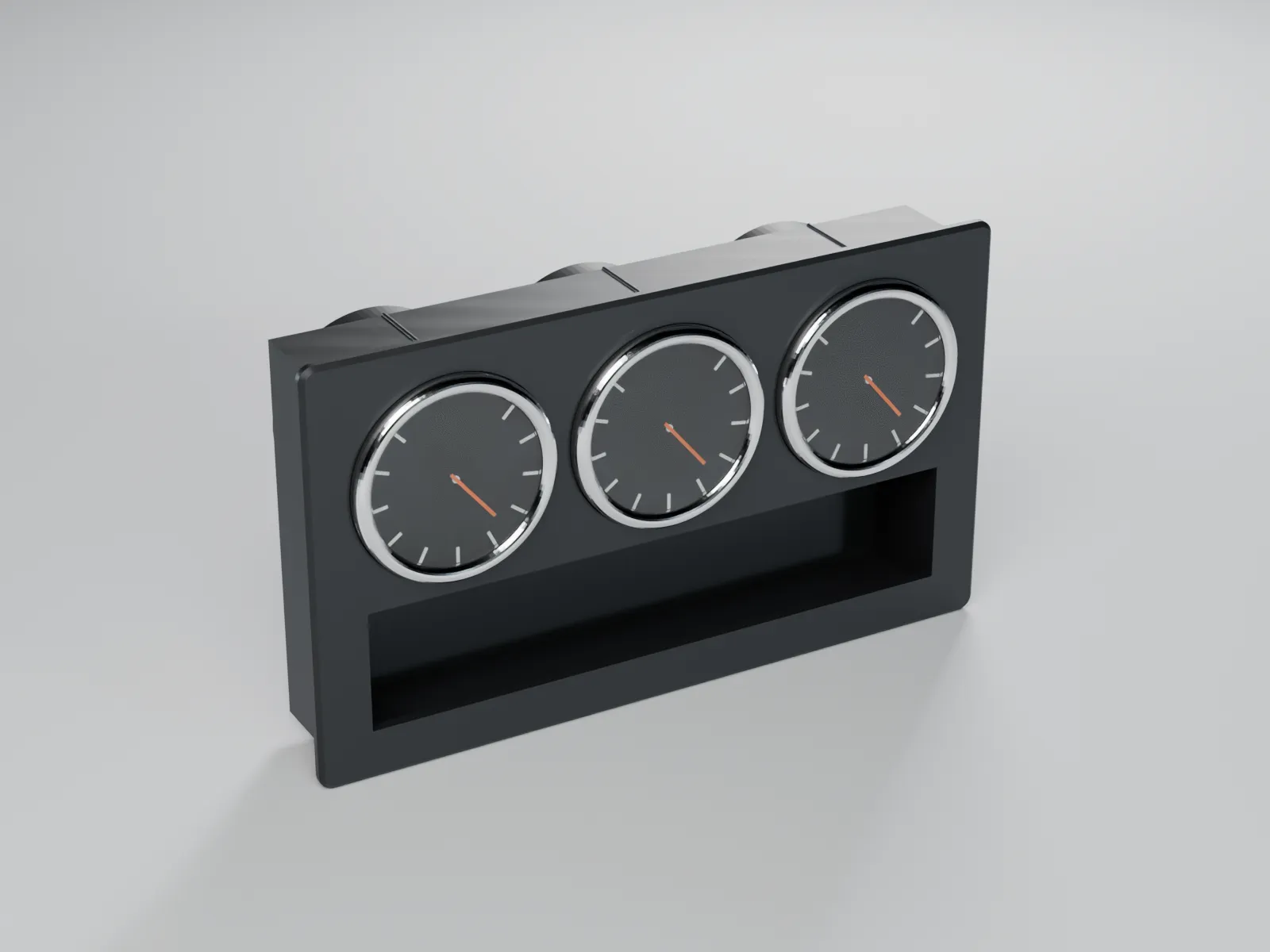
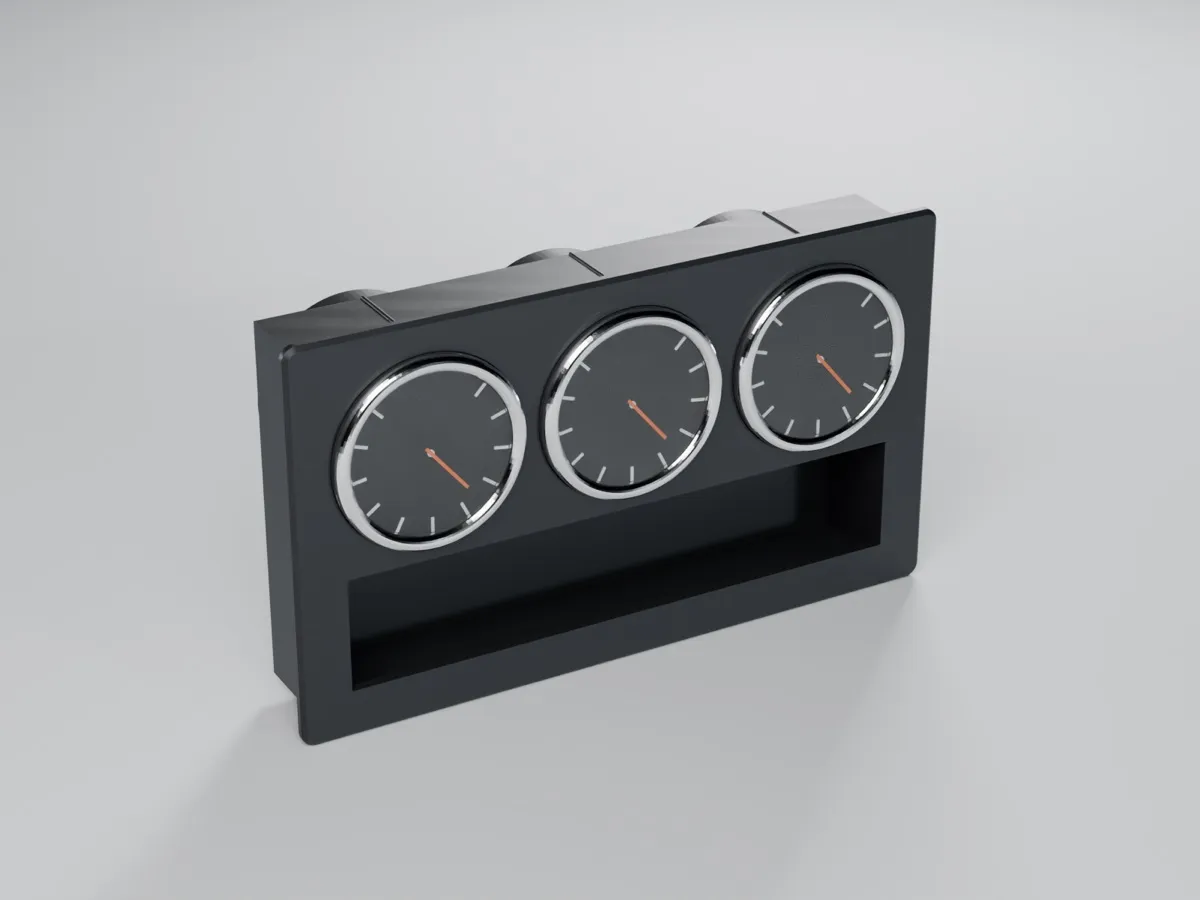
Three things, all without drilling, using a panel that clamps into the DIN cage with crush ribs: 52 mm gauges, Contura-style rocker switches or a storage pocket. In a single-DIN slot (50 mm tall) 52 mm gauges sit in cups in front of the panel, because they are taller than the slot. In a double-DIN slot (100 mm tall) three gauges fit flush in the face.
- Single DIN (ISO 7736)
- opening 182 × 53 mm, unit 178 × 50 mm
- Double DIN
- unit 178 × 100 mm (ISO 7736), also 180 × 100 mm
- 52 mm gauge
- 52.39 mm body, printed bore 52.79 mm
- Contura switch
- cutout 36.8 × 21.1 mm
- Mounting
- crush ribs in the DIN cage, no drilling
- Material
- PETG, ASA or ABS; no PLA
What fits the slot
After moving to a double-DIN head unit or a hidden radio, a slot is often left empty. All our DIN panels clamp into the existing DIN cage with crush ribs; nothing is drilled.
| Panel | Slot | What | Notes |
|---|---|---|---|
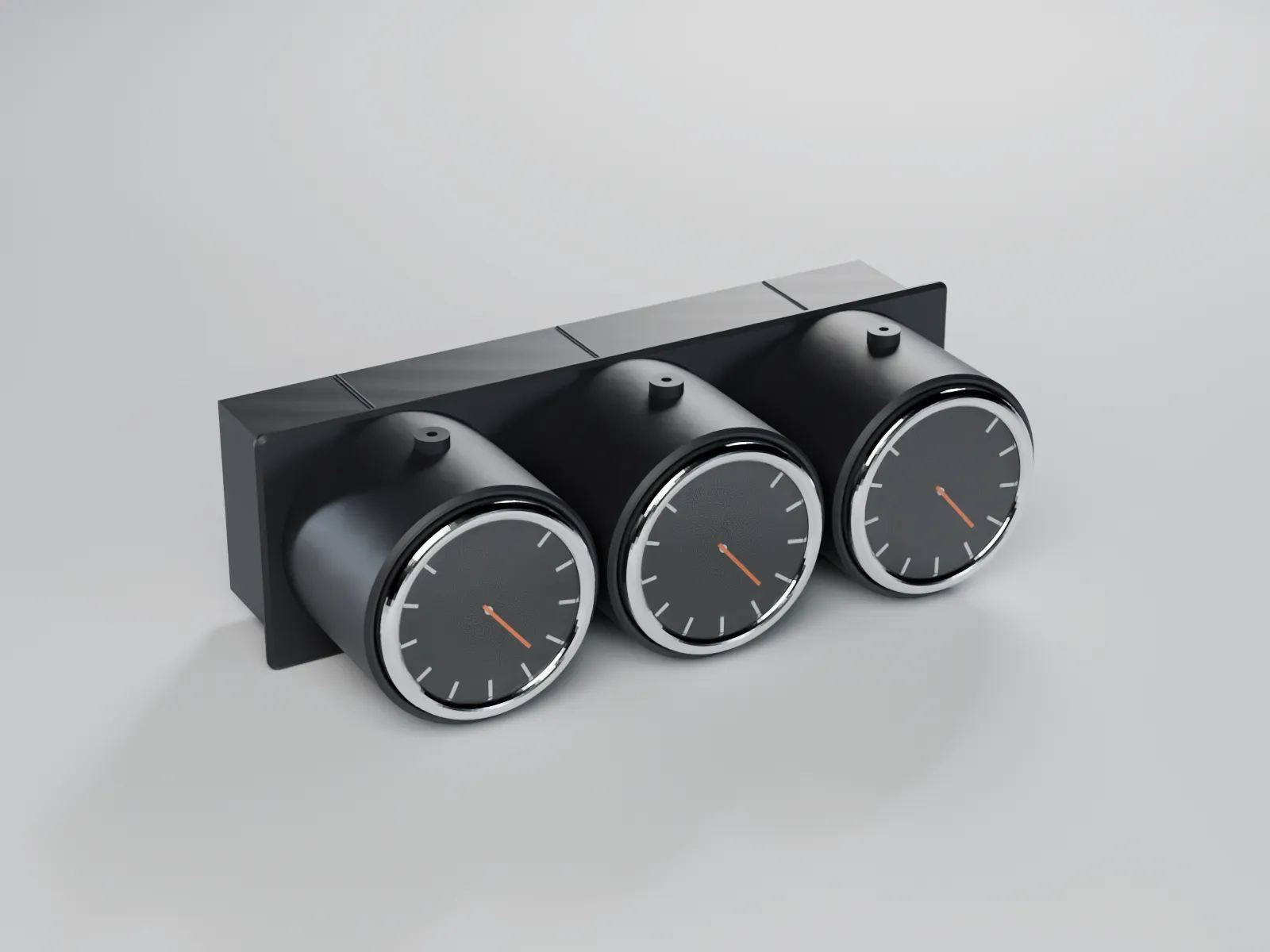
| Single DIN, 3 or 2 gauges | single DIN | 52 mm gauges | cups in front of the panel, gauge depth up to 45 or 55 mm |
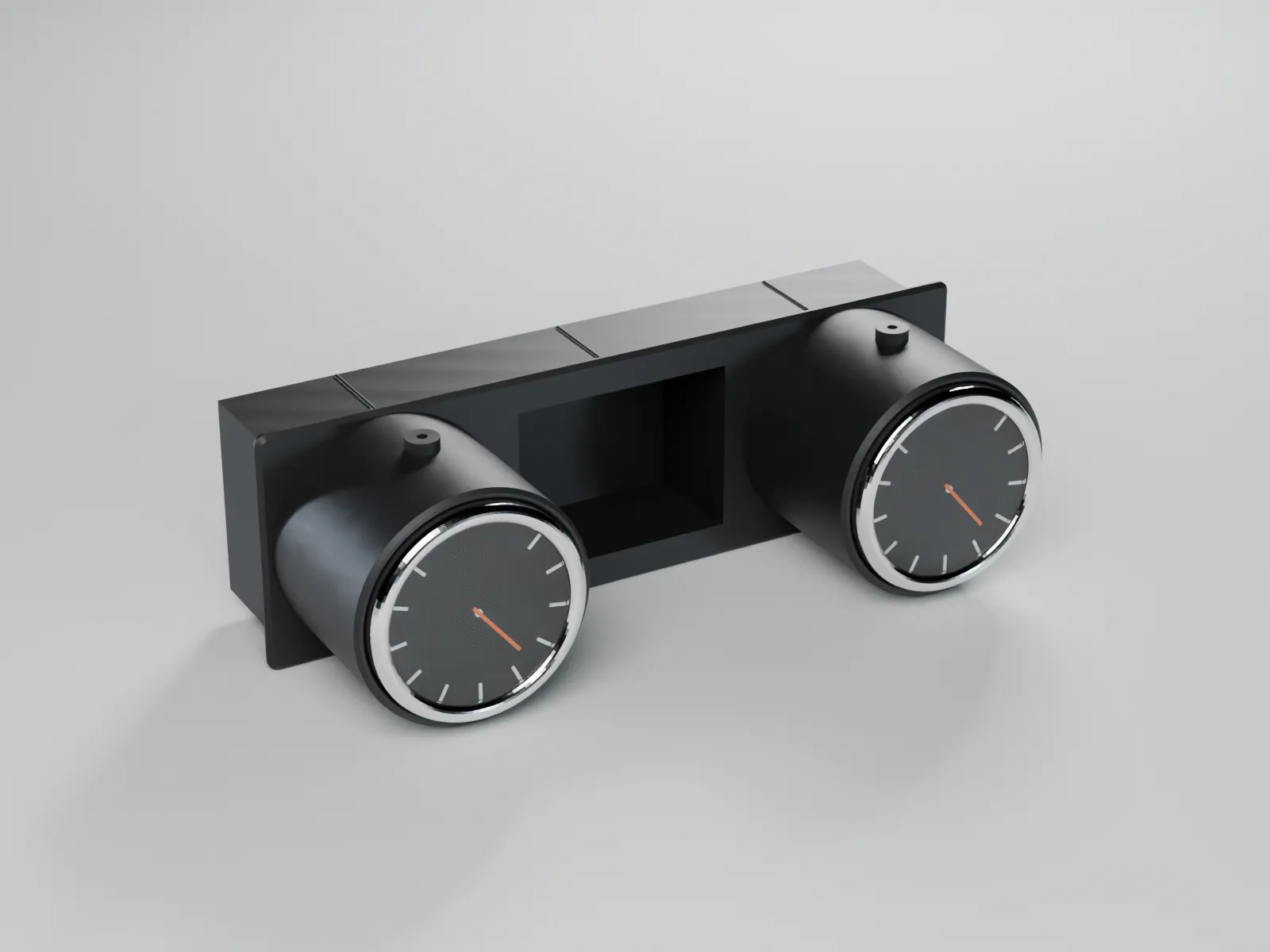
| Single DIN, 2 gauges + pocket | single DIN | 2 × 52 mm + pocket | pocket 56 mm wide, 30 mm deep |
| Double DIN, flush | double DIN | 3 or 2 × 52 mm | gauges flush, pocket or closed area below |
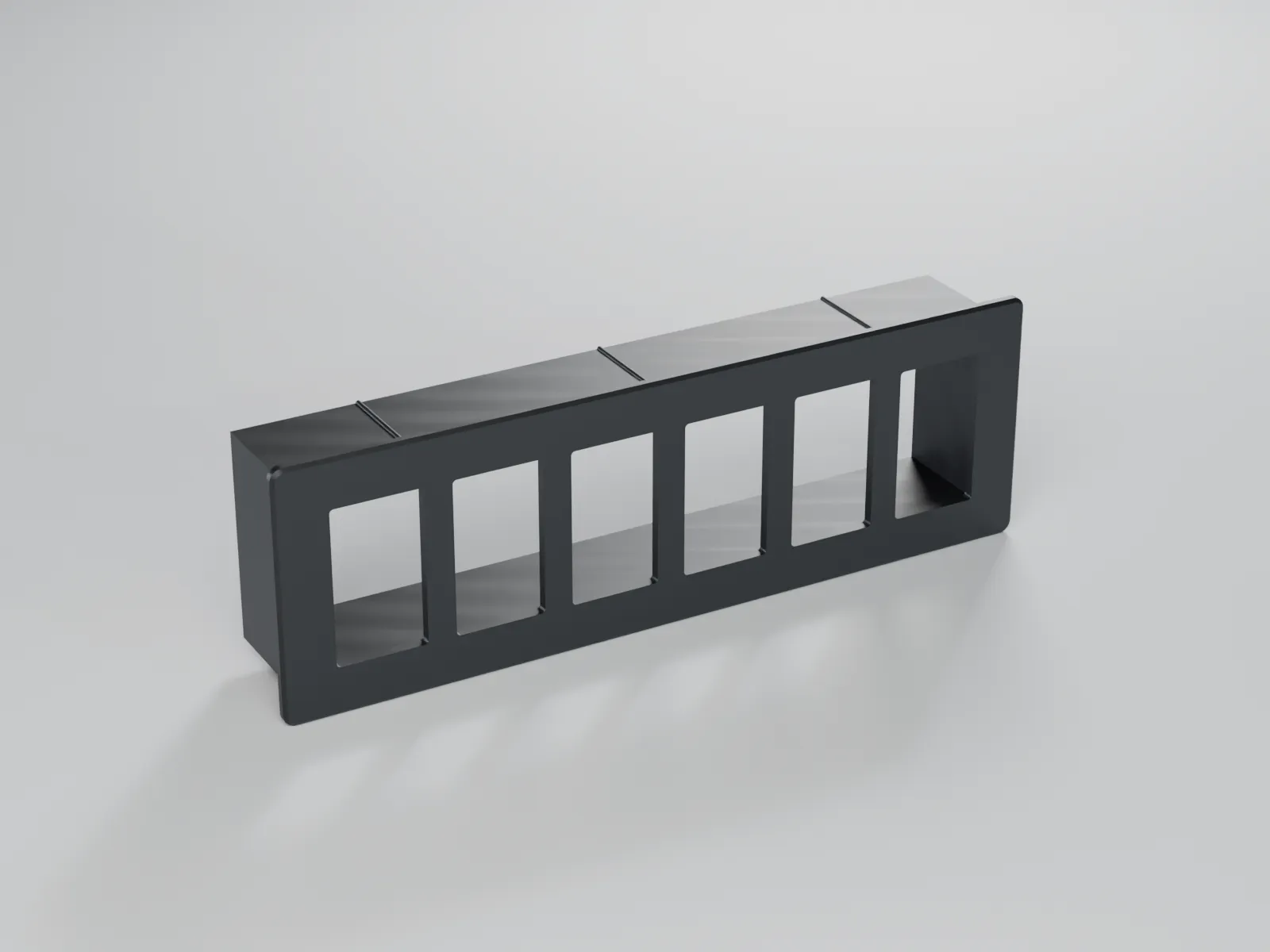
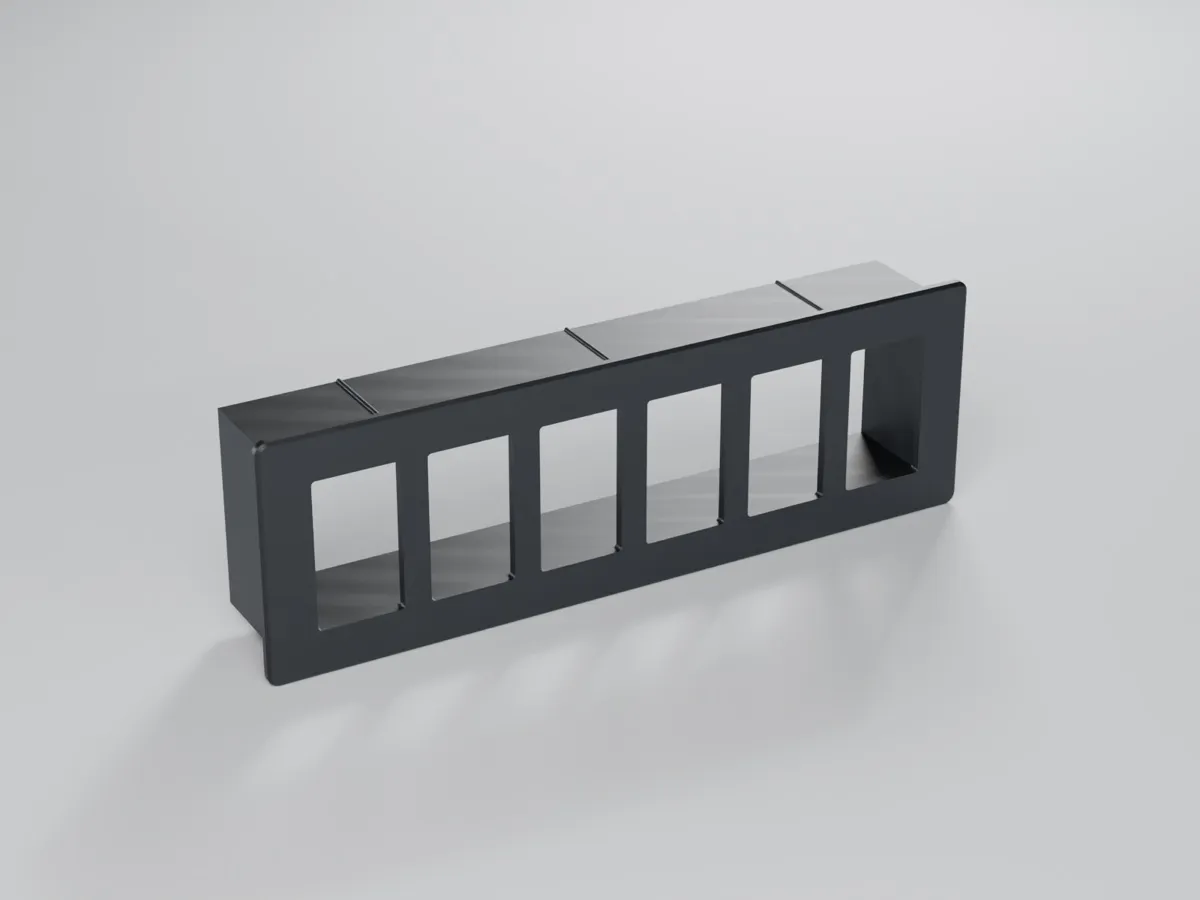
| Switch panel | single DIN | 6 or 4 Contura switches | face 2.0 or 3.0 mm |
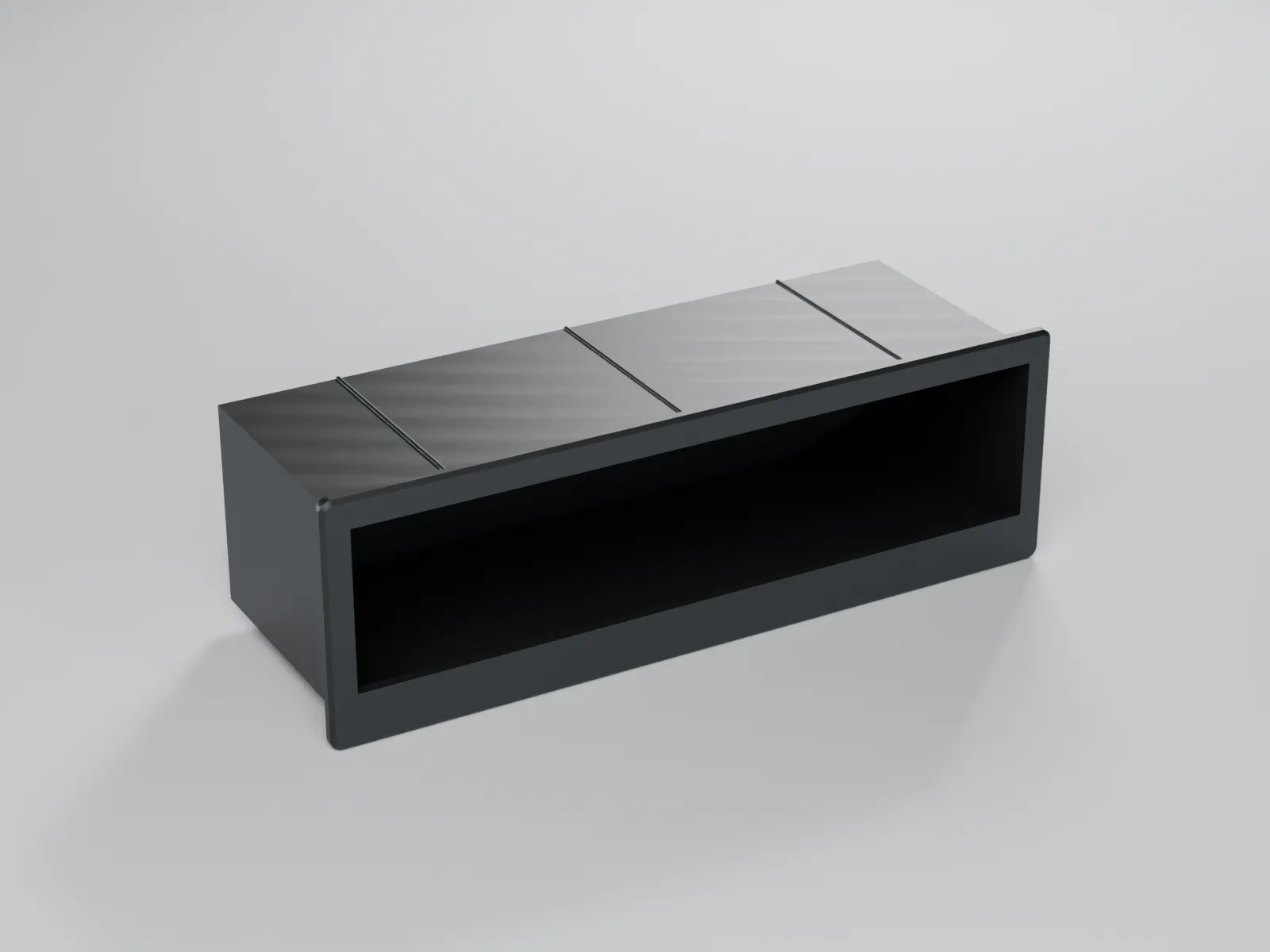
| Blank with pocket | single DIN | storage pocket | 50, 60 or 75 mm deep, back wall sloped at 45° |
Gauges in a single-DIN slot
A single-DIN slot is 50 mm tall and a 52 mm gauge is 52.39 mm, so the gauges sit in cups in front of the panel. The sleeve clamps into the slot and the faceplate (186 × 60 mm) covers the opening. One M3 set screw per gauge secures them. Pick the variant by your gauge depth (up to 45 or up to 55 mm).
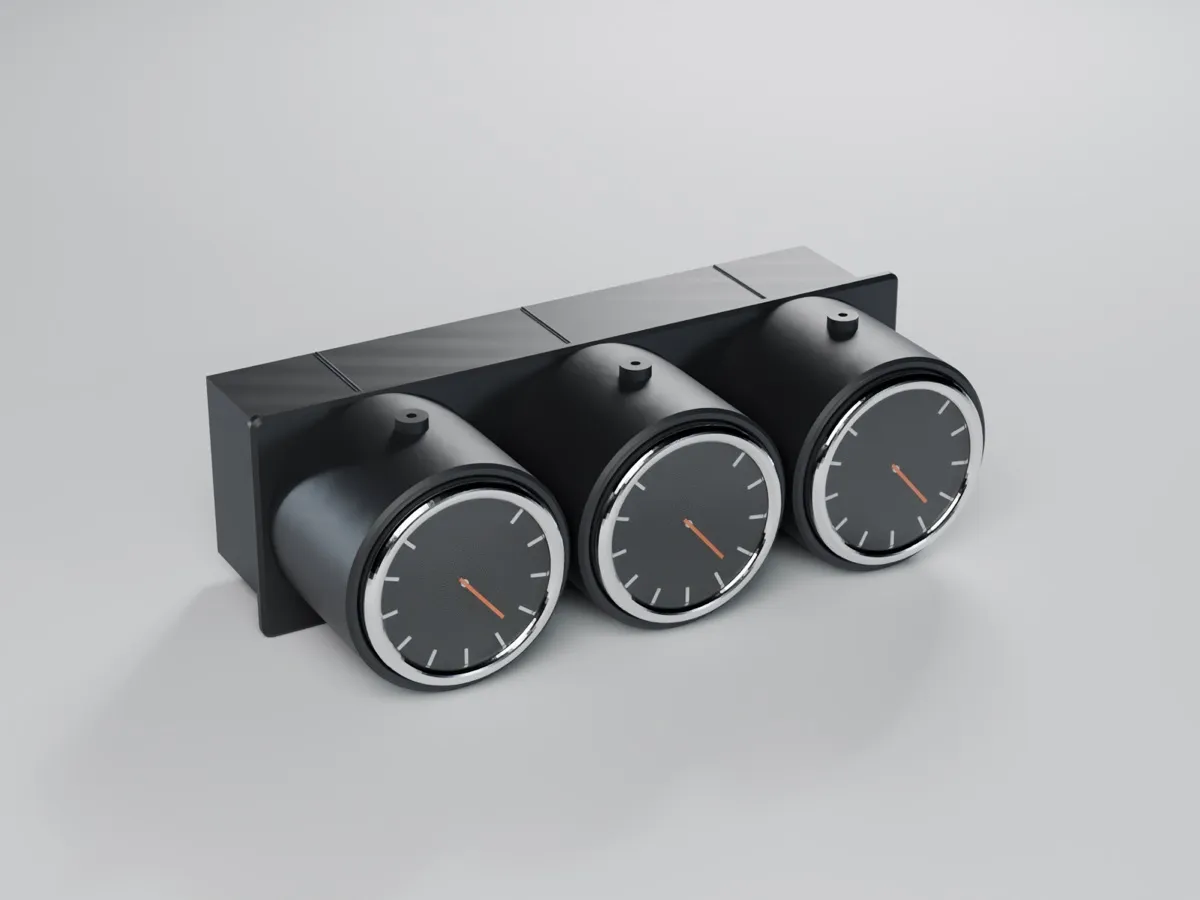
If you only need two gauges, take the version with a storage pocket in the middle for coins, keys or cables.
Flush gauges in a double-DIN slot
A double-DIN slot has enough height: the gauge bodies sit inside the slot and each gauge’s own mounting bracket clamps it from behind, like a factory fit. Below is a storage pocket (160 × 33 mm, 24 mm deep) with a lip, or a closed area, e.g. for your own switches. The bezel may be at most Ø 57 mm, which is the spacing between the gauges. More than three gauges do not fit flush (see FAQ).
Switches instead of gauges
The switch panel takes six or four Contura rocker switches upright, cutout 36.8 × 21.1 mm (+0.2 mm clearance). The switches snap straight into the faceplate. Pick the face thickness from your switches’ datasheet. Always wire loads through a fuse and relay.
Just a pocket
The blank turns the whole slot into a pocket: 172 × 45 mm opening, 50, 60 or 75 mm deep at the bottom. The back wall is sloped at 45° so things slide back rather than out, and a 6 mm lip at the front holds coins. Keep heavy or loose objects out – they can fly out under hard braking.
Test before printing
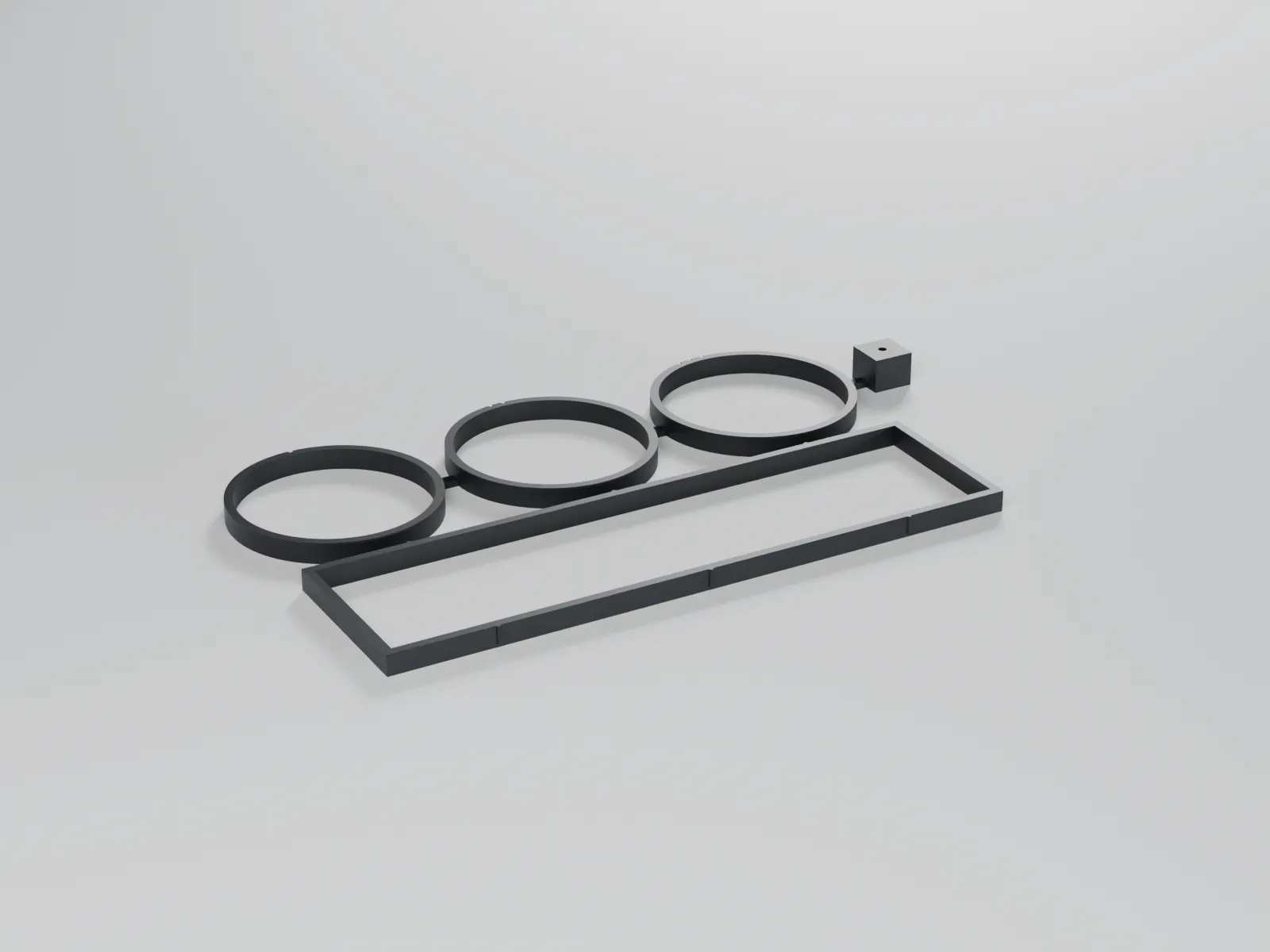
A DIN panel takes roughly 5 to 12 hours to print. Print the fit test set first (about 1.5 hours, 19 g) in the same material: it shows whether your gauges fit the +0.4 mm ring, whether the DIN sample clamps in the slot and whether the M3 thread holds. Background in Gauge does not fit the pod?
Safety
The panels must not cover controls, warning lights or airbag covers. Material: PETG, ASA or ABS, no PLA – see PETG or ASA in a car.
Fitting a panel in the DIN slot
- Use the fit test set to check that the single-DIN sample clamps in the slot and the gauge sits in the test ring.
- Remove the radio or old blank; the DIN cage stays in the car.
- Route the cables back through the faceplate and fit the gauges or switches.
- Secure the gauges (single DIN: M3 set screws, double DIN: the gauges' own brackets from behind).
- Push the panel straight into the DIN cage until the faceplate sits flush.
FAQ
Why do the gauges stick out on the single-DIN panel?
A 52 mm gauge is 52.39 mm in diameter, but a single-DIN slot is only 50 mm tall. It does not fit inside, so it sits in a cup in front of the panel. Flush mounting is only possible in a double-DIN slot.
Do four gauges fit in a double-DIN slot?
Not flush. Four bores side by side would need more than 211 mm of width; the slot is 178 mm. Two rows of two would need more than 105 mm of height; the slot is 100 mm. That is why the double-DIN panel takes three or two gauges.
Which switches fit the switch panel?
Contura-style rocker switches with a 36.8 × 21.1 mm cutout, as used by ARB, Carling, Narva and many LED rocker switch makers. Choose the face thickness (2.0 or 3.0 mm) to suit your switches' snap-in tabs; it is in the datasheet.
Do I need a fuse and relay?
Yes. Always wire loads such as driving lights, light bars or compressors through a fuse and relay; the switches only switch the relay.
What is the fit test set for?
It contains three rings for the 52 mm gauge body (+0.2, +0.4 and +0.6 mm), a 6 mm tall single-DIN sample with crush ribs and an M3 test block. After a short print you know whether your printer and material hit our dimensions, before you spend many hours on a panel.
Does the panel fit every car with a DIN slot?
Every slot to ISO 7736. Some makers use their own formats or a frame that is part of the trim. If in doubt, measure the opening or push the DIN sample from the test set into it.
Updated: 31 October 2026